 Image 1 of 2
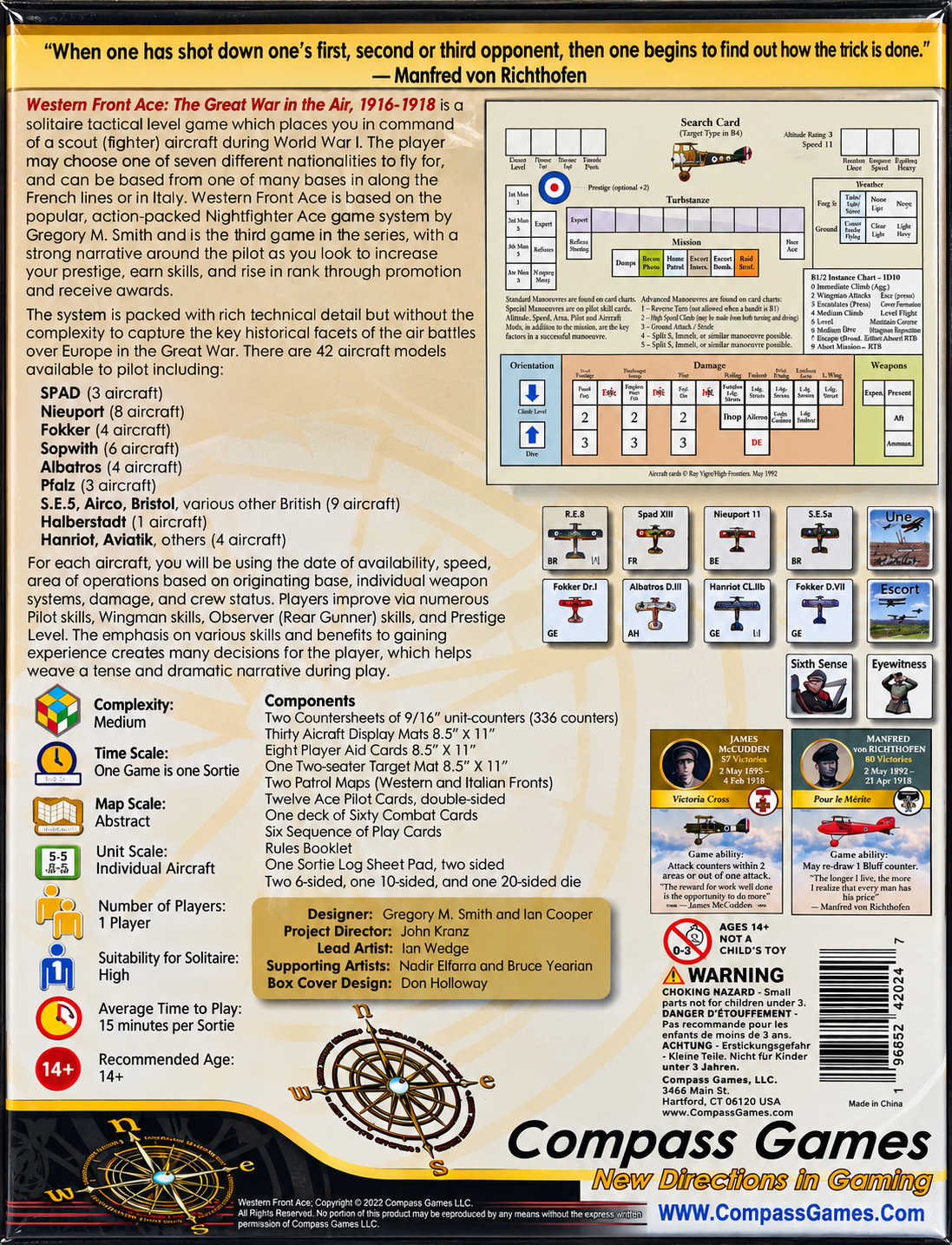 Image 2 of 2
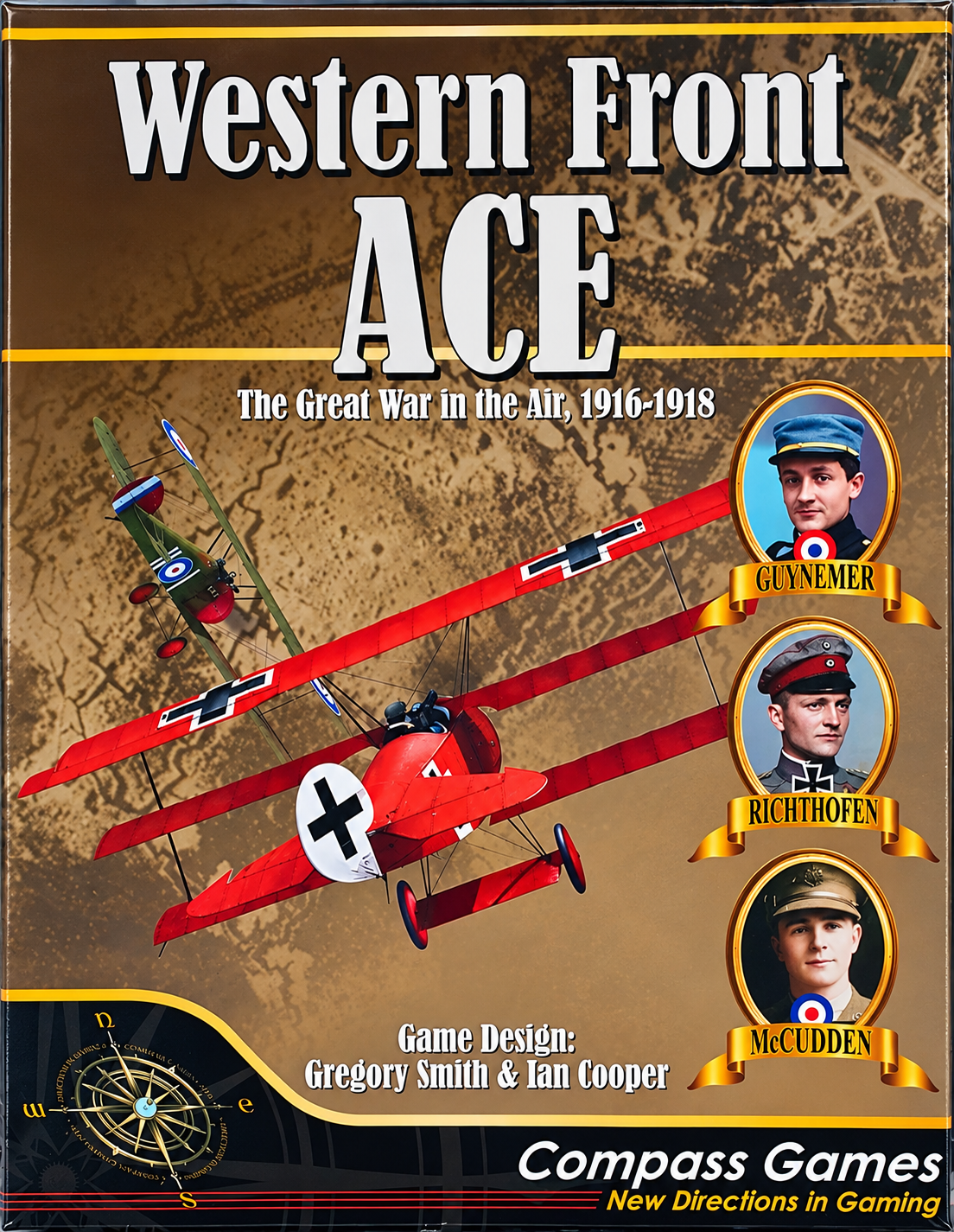
Western Front Ace: The Great War in the Air, 1916–1918 is a solitaire tactical-level wargame that puts you in the cockpit of a First World War fighter aircraft. Take on the role of a scout pilot, flying dangerous missions over the Western Front or Italy, engaging enemy aircraft and building a career as you work towards becoming one of the war's leading aces.
Designed by Gregory M. Smith, Western Front Ace is the third game in the series based on the popular Nightfighter Ace system. It combines detailed aerial combat with a career progression system, allowing players to develop their pilot's abilities, earn decorations, gain promotions and improve their chances of surviving the next mission.
Players can choose to fly for one of seven nationalities, operating from various aerodromes along the front lines. With 42 different fighter aircraft available, each with its own performance characteristics, weapons and historical availability, the game offers considerable variety as your pilot's career develops.
Every sortie brings new challenges, from routine patrols and escort duties to dangerous encounters with enemy fighters and heavily defended observation balloons. Success depends on tactical decisions, aircraft capabilities, pilot experience and sometimes a little luck.
This game includes:
2 Countersheets with 336 9/16" Counters
21 Double-Sided 8.5" × 11" Aircraft Display Mats (42 Aircraft)
7 Player Aid Cards (8.5" × 11")
1 Two-Seater Target Mat (8.5" × 11")
4 Double-Sided 8.5" × 11" Pilot Awards Display Mats (8 Displays)
1 Double-Sided 11" × 17" Air Operations Display Map (2 Maps)
24 Ace Pilot Cards
60 Combat Cards
1 Rules Booklet
1 Logsheet (8.5" × 11")
2 Six-Sided Dice
1 Ten-Sided Die
1 Twenty-Sided Die
Key Features:
Solitaire tactical-level simulation of First World War aerial combat
Covers fighter operations from 1916 to October 1918
Choose from seven nationalities and numerous aerodrome locations
42 historically based fighter aircraft with individual performance characteristics
Missions include line patrols, escort duties and balloon-busting operations
Detailed fighter-versus-fighter combat and wingman systems
Pilot career development through experience, skills, prestige and promotions
43 historical awards available across the represented nationalities
Aircraft upgrades and transfers to different operational bases
Weather, aircraft damage and landing procedures influence survival
Cooperative and competitive multiplayer options
Based on Gregory M. Smith's established Nightfighter Ace game system
About the Game:
Western Front Ace follows the career of a fighter pilot during the final years of the First World War, when aerial combat was developing rapidly and new aircraft designs were constantly changing the balance of power in the skies.
At the beginning of the game, you select your nationality, aircraft and operational assignment. Your pilot can serve at one of 20 geographical aerodrome groups along the front lines, with opportunities to transfer as their reputation and prestige increase.
The game features a wide selection of aircraft from some of the best-known manufacturers of the period, including:
SPAD: 3 Aircraft
Nieuport: 8 Aircraft
Fokker: 4 Aircraft
Sopwith: 6 Aircraft
Albatros: 4 Aircraft
Pfalz: 3 Aircraft
S.E.5, Airco, Bristol and Other British Aircraft: 9 Aircraft
Halberstadt: 1 Aircraft
Hanriot, Aviatik and Other Aircraft: 4 Aircraft
Each aircraft is represented through its historical introduction date, speed, armament, operational availability and damage characteristics. These differences influence combat performance and give players reasons to consider changing aircraft as newer models become available.
The game follows a structured sequence of play, with each turn representing a single sortie. After receiving a mission, your pilot travels towards the assigned area, checking for enemy aircraft and resolving any encounters along the way.
Combat may involve several rounds of fighting before your aircraft can return to base. Even after surviving an engagement, weather conditions and landing procedures can create further difficulties.
Between sorties, players manage their pilot's developing career. Successful missions may bring experience points, prestige, decorations or promotion. These rewards can be used to improve pilot and crew skills, request more advanced aircraft or arrange transfers to other bases.
Unlike systems where improvements are determined entirely by random rolls, Western Front Ace allows players to choose many of their pilot's skill upgrades. This creates meaningful decisions about whether to concentrate on combat effectiveness, survivability or other abilities that may prove valuable later.
Wingmen and observers also have their own skills, adding further detail to aerial encounters without requiring players to manage every technical aspect of flight.
A Career in the Skies
The central challenge is not simply to win individual dogfights, but to survive long enough to build a successful flying career.
As your pilot gains victories, their reputation grows, opening opportunities for improved aircraft and more demanding assignments. Participation in major ground offensives may offer additional chances for success, but also brings greater danger.
Enemy aircraft, combat damage, changing weather and the unpredictable nature of aerial warfare mean that even an experienced ace can be lost during a single mission.
A career continues until your pilot is killed or survives through to the end of October 1918. With different nationalities, aircraft, operational bases and career decisions, each playthrough can develop into a different story.
Although designed primarily for solitaire play, Western Front Ace also includes options for cooperative and competitive multiplayer sessions.
For players familiar with The Hunters, Silent Victory, Nightfighter Ace or Interceptor Ace, the game offers a similar combination of accessible mechanics, historical detail and individual career progression, this time set against the aerial battles of the First World War.
Game Details:
Players: 1 (with Options for 2 or More)
Playing Time: Approximately 15 Minutes per Sortie; Several Hours for a Full Career
Complexity: 6/10 – Medium
Solitaire Suitability: 10/10 – Excellent
Time Scale: Abstract – Individual Sorties with Time Compression through Contact Patrols
Map Scale: Abstract
Unit Scale: Individual Aircraft, Weapon Systems, Crew Members and Ammunition
Historical Period: 1916–1918
Game Designer: Gregory M. Smith
Western Front Ace: The Great War in the Air, 1916–1918 combines tactical aerial combat with the personal story of a First World War fighter pilot. With 42 aircraft to fly, a detailed career system and a wide variety of missions, it offers a highly replayable solitaire experience in which every successful sortie brings your pilot closer to becoming an ace — provided they survive the next encounter.