 Image 1 of 2
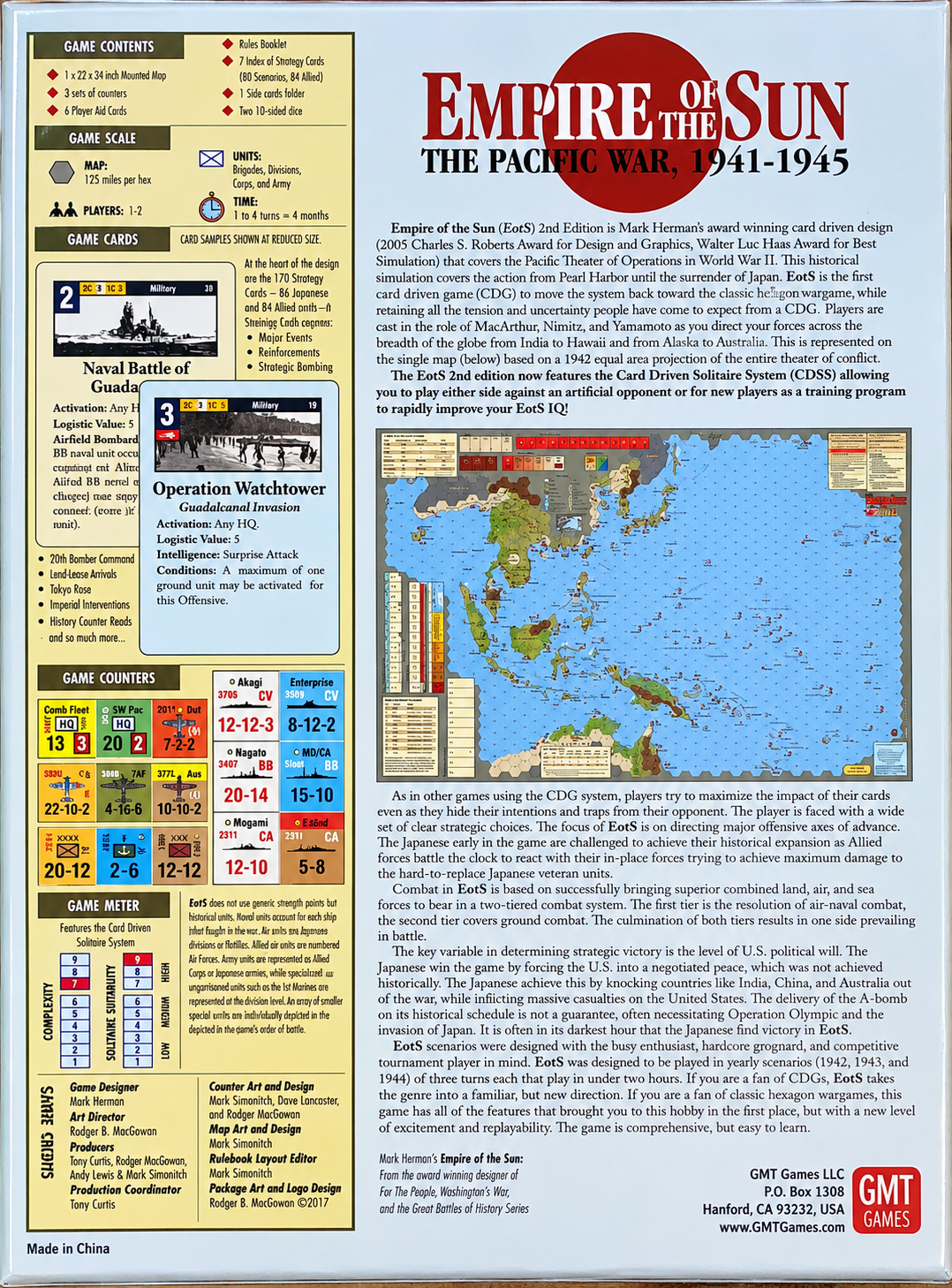 Image 2 of 2
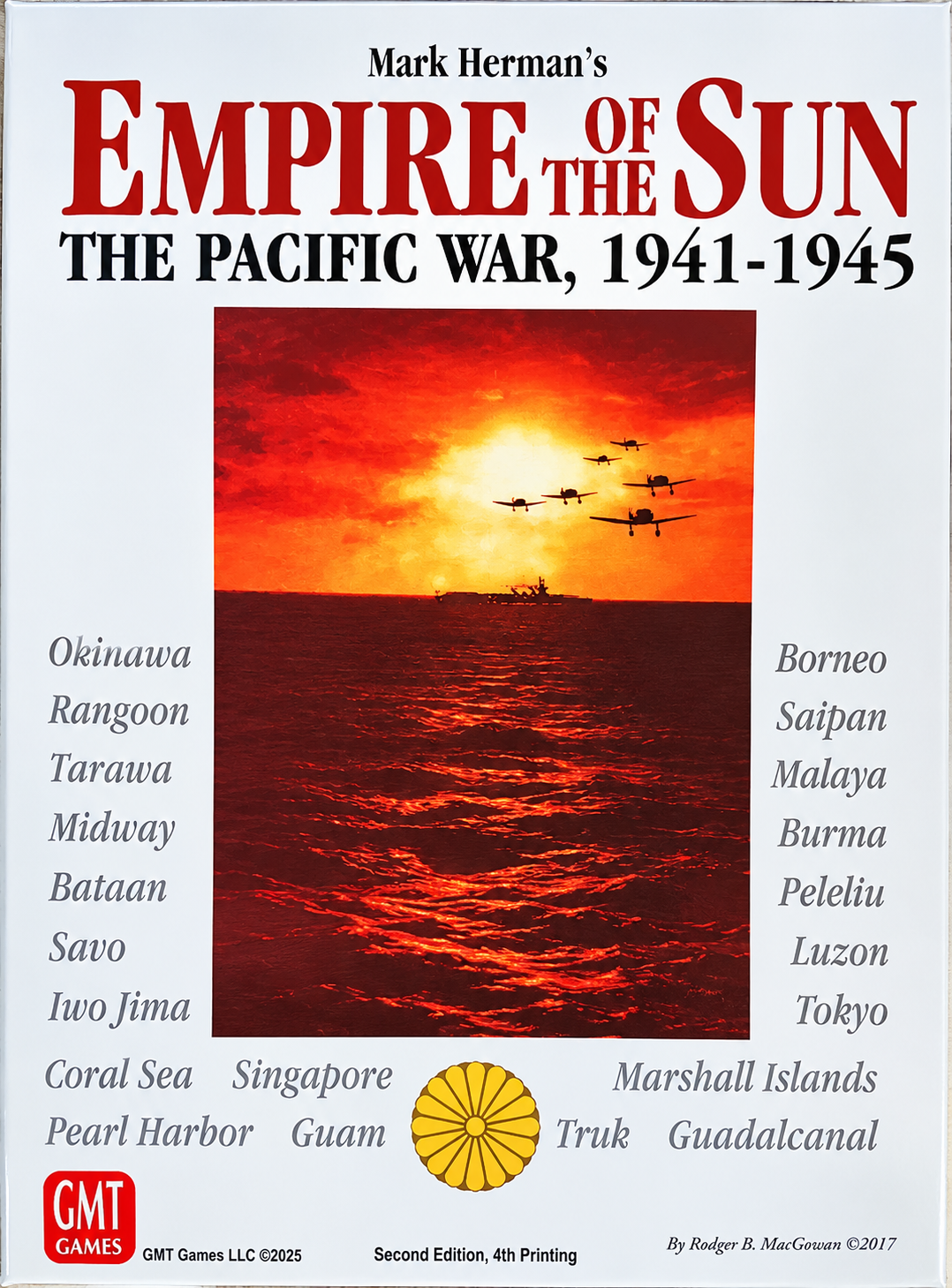
Empire of the Sun: The Pacific War, 1941–1945 is Mark Herman's strategic-level card-driven wargame covering the entire Pacific War, from the attack on Pearl Harbor through to the surrender of Japan. Combining the tension and uncertainty of a Card Driven Game with the movement and geographical detail of a traditional hex-based wargame, it places players in command of the major Allied and Japanese forces across a vast theatre stretching from India to Hawaii and from Alaska to Australia.
Players take on the strategic roles associated with commanders such as MacArthur, Nimitz, Yamamoto and Mountbatten, directing naval, air and ground forces across the Pacific. Rather than concentrating on individual tactical engagements, the game focuses on major offensives, control of key areas, allocation of resources and the difficult strategic decisions that shaped the course of the war.
Cards drive operations and historical events, giving each player numerous ways to employ their hand while keeping their intentions hidden from their opponent. Japan must exploit its early-war advantages and establish a strong defensive position, while the Allies must react with the forces available, preserve their strength and gradually build the offensive power needed to push back across the Pacific.
This game includes:
1 22" × 34" Mounted Mapboard
1 11" × 17" Unmounted Burma Map
280 9/16" Counters
88 5/8" Counters
86 Japanese Strategy Cards
84 Allied Strategy Cards
2 Player Aid Cards (11" × 17" and 8.5" × 11")
1 Updated Rules Booklet, including Burma Scenario Setup
1 Ten-Sided Die
Key Features:
Strategic-level recreation of the Pacific War from Pearl Harbor to the surrender of Japan
Card-driven system combined with traditional hex-based movement
Separate Allied and Japanese Strategy Card decks
Combined land, air and naval operations across the entire Pacific theatre
Two-tier combat system covering air-naval and ground combat
U.S. political will plays a central role in determining strategic victory
China represented through an abstract strategic system
Active operations in Burma and Northern India
Island campaigns and the Allied advance across the Pacific
Possibility of India, China and Australia being forced out of the war
Multiple shorter scenarios alongside the complete campaign
Card Driven Solitaire System for solo play
5th Printing includes the Burma Scenario and its dedicated 11" × 17" map
About the Game:
At the heart of Empire of the Sun is the challenge of deciding how and where to commit limited military resources across an enormous theatre of operations. Players use Strategy Cards to activate headquarters, launch offensives and trigger historical events, while attempting to conceal their wider plans and anticipate what their opponent intends to do next.
The Japanese player begins the war with the opportunity to reproduce or exceed Japan's rapid historical expansion, but many of its veteran forces are difficult to replace. The Allied player must therefore make the most of the forces already available, inflicting losses where possible while preparing for the growing Allied strength that will arrive as the war progresses.
Combat brings together land, air and naval forces through a two-stage system. Air and naval combat is resolved first, followed by ground combat, making the coordination of different branches of the armed forces an important part of planning successful operations.
Victory is not determined simply by conquering territory. U.S. political will is a key element of the game, and Japan can achieve victory by creating the conditions for a negotiated peace. Putting sufficient pressure on Allied positions, potentially forcing countries such as India, China or Australia out of the war, and inflicting serious American losses can all contribute towards this objective.
The Allied player, meanwhile, must determine how best to conduct the long advance towards Japan. The historical delivery of the atomic bomb is not guaranteed, meaning that the war may ultimately require Operation Olympic and an invasion of Japan.
China is represented through an abstract strategic track, creating difficult choices over Allied support and Japanese resources. Burma and Northern India provide an important area of sustained ground operations, while the wider game recreates the naval, air and island campaigns that characterised much of the Pacific conflict.
The game also provides shorter yearly scenarios covering 1942, 1943 and 1944, each consisting of three turns and designed to be completed in under two hours. These offer more manageable sessions while retaining the strategic decisions and card-driven interaction of the full campaign.
This 5th Printing includes the Burma Scenario, originally published in C3i #35. The updated rules booklet contains the scenario setup, and a dedicated 11" × 17" unmounted Burma map is included.
Other components remain unchanged from the previous printing apart from corrections to known errata.
Empire of the Sun: The Pacific War, 1941–1945 combines the strategic scope of a traditional Pacific theatre wargame with the uncertainty and player interaction of a card-driven system. Its combination of military operations, political considerations and competing strategic priorities provides a comprehensive treatment of the Pacific War while offering considerable replayability across both the full campaign and shorter scenarios.
Game Details:
Players: 1–2
Time Scale: 4 Months per Turn
Map Scale: 150 Miles per Hex
Unit Scale: Brigade, Division, Corps and Army
Complexity: Medium
Solitaire Suitability: High