 Image 1 of 2
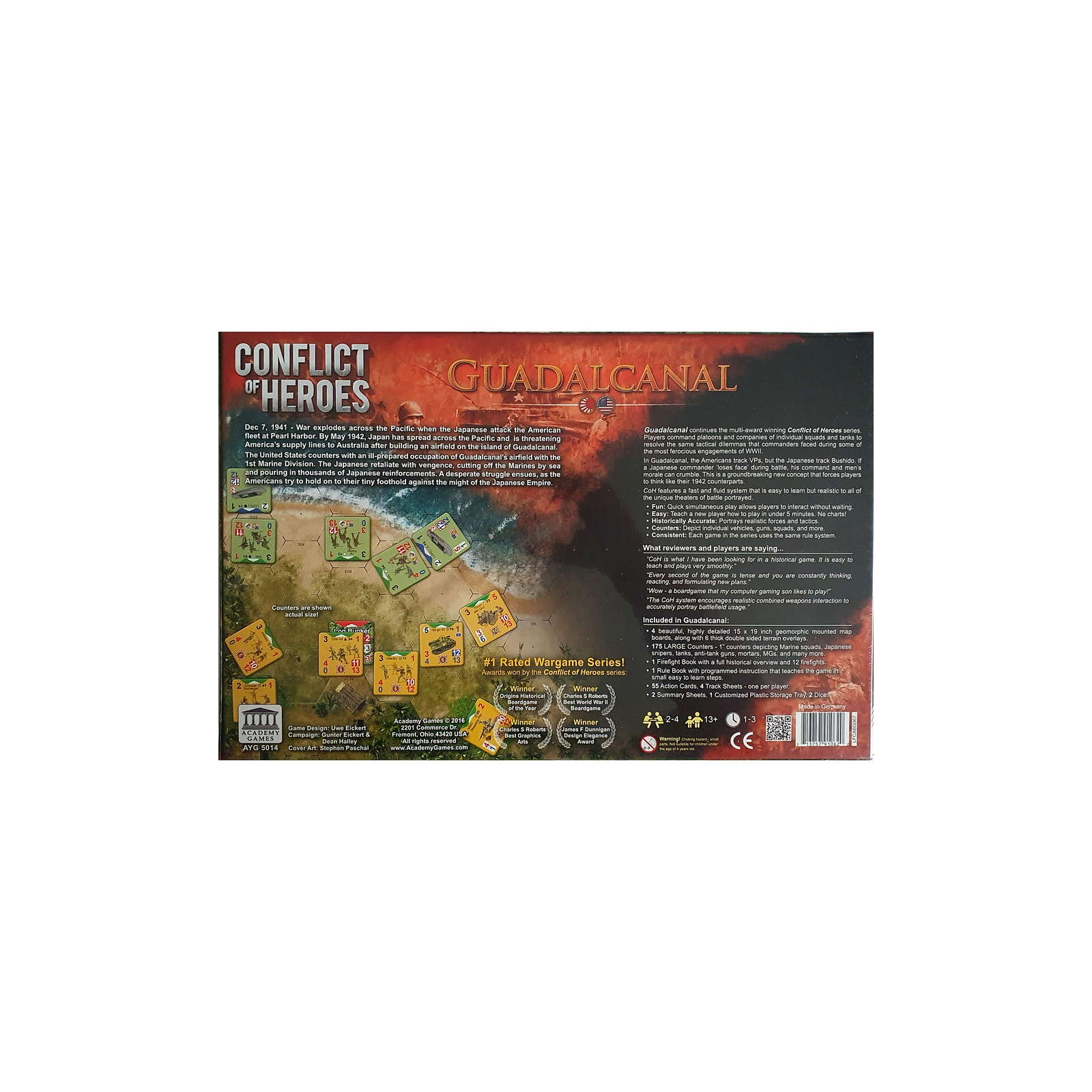 Image 2 of 2
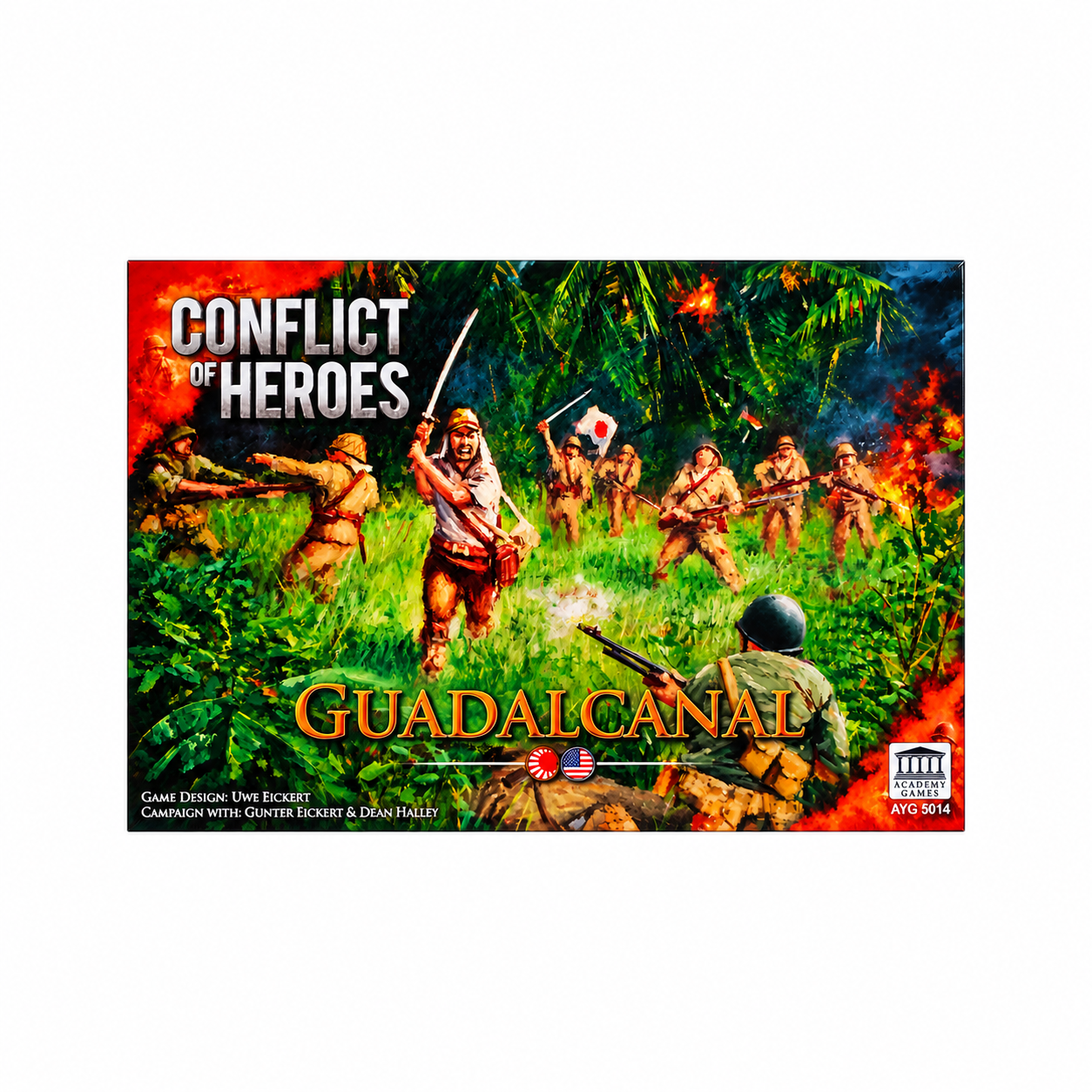
Conflict of Heroes: Guadalcanal – The Pacific 1942 is a tactical-level World War II wargame recreating the fierce fighting between American and Japanese forces during the Guadalcanal campaign. Part of Academy Games' award-winning Conflict of Heroes series, the game places players in command of Marine and Japanese infantry squads, tanks and supporting weapons as they battle across the beaches, jungles and ridges of the South Pacific.
Following Japan's attack on Pearl Harbor in December 1941, Japanese forces rapidly expanded their control across the Pacific. By mid-1942, they were threatening the vital supply routes connecting the United States with Australia. The construction of a Japanese airfield on Guadalcanal posed a serious danger to Allied operations in the region.
In August 1942, the American 1st Marine Division launched an offensive to capture the airfield, taking the Japanese defenders by surprise. Although the initial landing was successful, the Marines soon faced determined Japanese counterattacks, growing enemy reinforcements and the constant threat of being cut off from supplies.
What followed was a prolonged struggle for control of Guadalcanal, with both sides fighting across difficult terrain and under increasingly desperate conditions. The Americans had to defend their foothold around Henderson Field, while Japanese commanders attempted to drive them from the island through repeated assaults, night attacks and determined infantry operations.
Conflict of Heroes: Guadalcanal brings these engagements to the tabletop using a fast-moving tactical system that combines historical detail with accessible rules and challenging battlefield decisions.
This game includes:
4 Highly Detailed 15" × 19" Mounted Geomorphic Game Maps
6 Thick Double-Sided Terrain Overlays
175 Large 1" Unit Counters Representing American and Japanese Forces
1 Firefight Book with Historical Background and 12 Firefights
1 Rulebook with Programmed Learning Instructions
55 Action Cards
4 Track Sheets
2 Summary Sheets
1 Customised Plastic Storage Tray
2 Dice
Key Features:
Tactical-level recreation of the 1942 Guadalcanal campaign
Command American Marines or Japanese forces in squad-level combat
12 historical firefights covering important engagements of the campaign
Includes battles associated with Alligator Creek, Bloody Ridge and Henderson Field
Fast and interactive gameplay using the established Conflict of Heroes system
Distinct American and Japanese command systems
Japanese Bushido mechanics introduce morale and command challenges
American forces track Victory Points while Japanese forces must also manage Bushido
Infantry, tanks, anti-tank guns, mortars and machine guns represented by individual counters
Tactical situations involving jungle fighting, night operations, amphibious actions and Japanese assaults
Mounted geomorphic maps and terrain overlays allow different battlefield layouts
Programmed learning rules introduce the game system in manageable stages
Designed for 2–4 players
About the Game:
Conflict of Heroes: Guadalcanal continues the tactical system established in Awakening the Bear and Storms of Steel, adapting it to the very different conditions of the Pacific War.
Rather than commanding entire armies, players control platoons and companies made up of individual squads, vehicles and supporting weapons. Each engagement presents a particular tactical situation, requiring players to make decisions about movement, positioning, firepower and the effective use of their available forces.
The game places considerable emphasis on the differences between American and Japanese battlefield tactics.
American commanders must make the most of their available resources, coordinate supporting weapons and maintain their defensive positions against determined Japanese attacks. Specialist Marine formations, including Raiders and Paramarines, bring additional capabilities to the battlefield.
Japanese forces approach combat differently, with an emphasis on aggressive infantry tactics, morale and the Bushido system. This creates a distinctive challenge for the Japanese player, who must consider not only battlefield objectives but also the consequences of losing face during combat.
The Bushido System
One of the game's most distinctive features is its treatment of Japanese command and morale.
While the American player tracks Victory Points, the Japanese player must also manage Bushido. This system reflects the importance placed on honour, determination and maintaining the confidence of troops and superior commanders.
Japanese forces may be encouraged to undertake particularly aggressive actions, including determined assaults against defended positions. However, battlefield setbacks and failures can have consequences beyond the immediate loss of units.
A Japanese commander who loses face may find that the morale and effectiveness of their command begin to deteriorate.
This creates an additional layer of decision-making and gives the two sides different tactical considerations, reflecting the contrasting approaches to combat during the Guadalcanal campaign.
Tactical Combat in the Pacific
The fighting on Guadalcanal was very different from the armoured battles of the European theatre. Dense jungle, limited visibility, difficult terrain and the threat of sudden attacks made even relatively small engagements dangerous.
The game recreates these conditions through a variety of firefights involving infantry, armour and supporting weapons.
Players may find themselves defending important positions against Japanese attacks, advancing through difficult terrain, coordinating supporting fire or attempting to overcome enemy resistance during close-range engagements.
The included firefights draw on historical actions from the campaign, including fighting around Alligator Creek, Bloody Ridge and Henderson Field.
The four mounted maps depict Pacific island terrain, including beaches, jungle and elevated ground. Double-sided overlays allow players to modify the battlefield with additional terrain features, creating different tactical situations across the included scenarios.
Fast and Accessible Gameplay
The Conflict of Heroes system is designed to keep both players involved throughout the action, reducing the waiting time often associated with traditional turn-based wargames.
Its streamlined rules allow players to concentrate on tactical decisions rather than repeatedly consulting complicated charts.
The programmed instruction rulebook introduces the mechanics gradually, allowing newcomers to learn the system through play before moving on to more demanding engagements.
Despite its accessibility, the game retains important tactical considerations, including unit positioning, combined arms coordination, terrain advantages and the effective use of supporting weapons.
With different battlefield situations, asymmetric forces and opportunities to experiment with alternative tactics, the included firefights offer considerable replayability.
Game Details:
Players: 2–4
Playing Time: 1–3 Hours
Complexity: Accessible Tactical System
Game Type: Tactical-Level World War II Wargame
Historical Period: Guadalcanal Campaign, 1942
Unit Scale: Individual Infantry Squads, Vehicles and Supporting Weapons
Recommended Age: 13+
Conflict of Heroes: Guadalcanal – The Pacific 1942 brings the intense fighting of the Pacific campaign to the tabletop through historically based scenarios, distinctive Japanese and American tactics, and an accessible but challenging combat system. With 12 firefights, detailed mounted maps and a wide selection of units, it offers a varied tactical experience for players interested in the Guadalcanal campaign and the wider Pacific War.