 Image 1 of 1
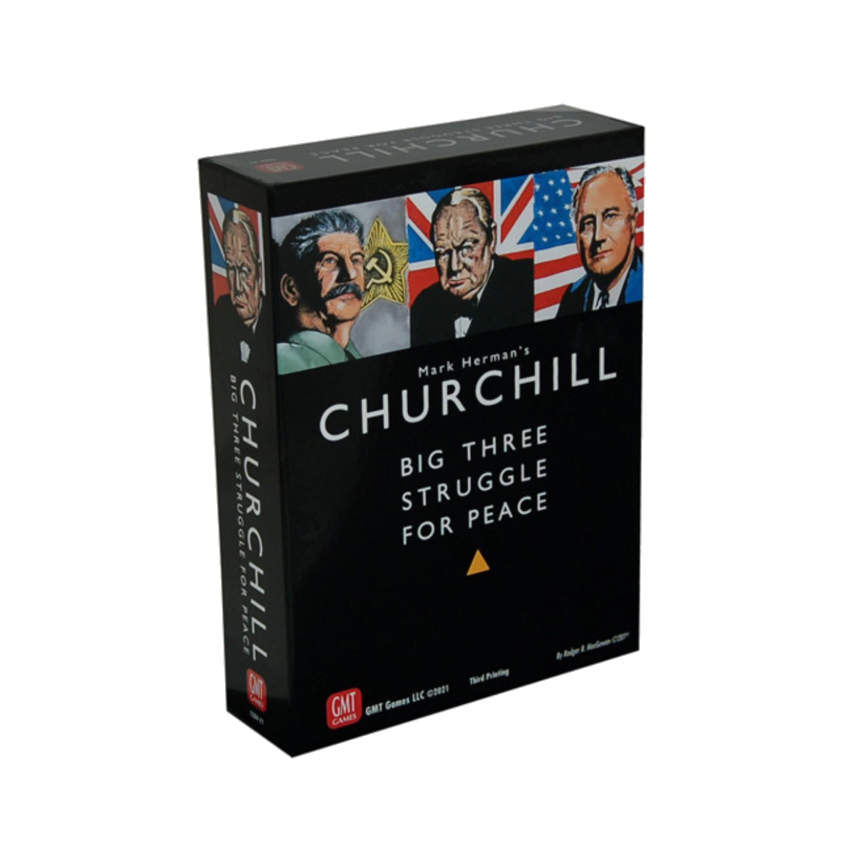
Churchill: Big Three Struggle for Peace is a unique game of diplomacy, negotiation, and strategic rivalry set during the closing years of the Second World War. Rather than commanding armies on the battlefield, players assume the roles of Winston Churchill, Franklin D. Roosevelt, or Joseph Stalin as they compete and cooperate to shape both the Allied war effort and the post-war world.
By late 1942, the Axis advance had been halted at key battles such as Stalingrad, El Alamein, and Guadalcanal. With victory increasingly appearing inevitable, the Allied leaders began focusing not only on defeating Germany and Japan, but also on securing their own political objectives for the peace that would follow. In Churchill, players must balance these competing priorities while ensuring the Allies still succeed in winning the war.
This is not a traditional wargame. Instead, Churchill is a political struggle built around cooperation, negotiation, and strategic competition. Over the course of ten historical conferences, players debate major wartime issues, influence military priorities, direct diplomatic efforts, and attempt to secure the strongest post-war position for their nation.
Each conference revolves around a range of critical issues, including military offensives, production priorities, clandestine operations, political influence, strategic warfare, and leadership decisions. Using decks of historical advisors and statesmen, players manoeuvre issues around the conference table, seeking to gain leverage and steer Allied strategy in their favour.
Every leader possesses unique strengths and special abilities, but also potential weaknesses. Roosevelt may leave office and be replaced by Truman, Churchill can suffer health setbacks, and Stalin's political purges may weaken Soviet effectiveness. Deciding when and how to employ these powerful leaders is a key part of the game's strategic depth.
Following each conference, players implement their newly won policies across a global stage. Political influence, intelligence operations, and military offensives shape events across Europe, the Mediterranean, the Pacific, and beyond. The development of the atomic bomb, partisan networks, governments-in-exile, and competing visions for post-war Europe all play an important role in determining the final outcome.
Victory is not guaranteed. If the Allied powers fail to defeat Germany, Italy, and Japan before the final conference, everyone loses. If the Allies prevail, the player who has secured the strongest political position and greatest influence over the post-war settlement emerges as the winner.
Designed for three players but fully playable with two players, solitaire, or even zero-player mode using the game's automated systems, Churchill offers a rich and highly replayable experience unlike any other WWII strategy game.
Tolstoy Scenario – 3 Conferences (short game)
D-Day Scenario – 5 Conferences (medium game)
Full Campaign – 10 Conferences ending with Potsdam
Political rather than military focus
Historical conferences from 1943 to 1945
Cooperative and competitive gameplay ("coopetition")
Detailed diplomatic and political systems
Military theatre management across multiple fronts
Intelligence, partisan, and clandestine operations
Development and use of the Atomic Bomb
Solo, two-player, three-player, and zero-player modes
High replayability through variable conference issues and automated opponents
One 22" x 34" Mounted Mapboard
One Full-Color Countersheet
Three Player Aid Cards
One 10-sided Die (D10)
One 10-sided Die (D10, numbered 0–9)
Rules of Play Manual
Cards, Blocks, Tokens, and Stickers
One Sticker Sheet
Six 6-sided Dice
Time Scale: 1943 to 1945
Map: European and Pacific Theatres of War
Players: 3, 2, or Solitaire
Playing Time: 90 Minutes – 5 Hours
Complexity: Medium to High
Solitaire Suitability: Medium to High
Recommended Age: 14+
Will you guide the Allied powers to victory while securing your nation's place in the post-war world, or will your rivals shape history instead? The fate of the peace rests in your hands.
Churchill: Big Three Struggle for Peace is a unique game of diplomacy, negotiation, and strategic rivalry set during the closing years of the Second World War. Rather than commanding armies on the battlefield, players assume the roles of Winston Churchill, Franklin D. Roosevelt, or Joseph Stalin as they compete and cooperate to shape both the Allied war effort and the post-war world.
By late 1942, the Axis advance had been halted at key battles such as Stalingrad, El Alamein, and Guadalcanal. With victory increasingly appearing inevitable, the Allied leaders began focusing not only on defeating Germany and Japan, but also on securing their own political objectives for the peace that would follow. In Churchill, players must balance these competing priorities while ensuring the Allies still succeed in winning the war.
This is not a traditional wargame. Instead, Churchill is a political struggle built around cooperation, negotiation, and strategic competition. Over the course of ten historical conferences, players debate major wartime issues, influence military priorities, direct diplomatic efforts, and attempt to secure the strongest post-war position for their nation.
Each conference revolves around a range of critical issues, including military offensives, production priorities, clandestine operations, political influence, strategic warfare, and leadership decisions. Using decks of historical advisors and statesmen, players manoeuvre issues around the conference table, seeking to gain leverage and steer Allied strategy in their favour.
Every leader possesses unique strengths and special abilities, but also potential weaknesses. Roosevelt may leave office and be replaced by Truman, Churchill can suffer health setbacks, and Stalin's political purges may weaken Soviet effectiveness. Deciding when and how to employ these powerful leaders is a key part of the game's strategic depth.
Following each conference, players implement their newly won policies across a global stage. Political influence, intelligence operations, and military offensives shape events across Europe, the Mediterranean, the Pacific, and beyond. The development of the atomic bomb, partisan networks, governments-in-exile, and competing visions for post-war Europe all play an important role in determining the final outcome.
Victory is not guaranteed. If the Allied powers fail to defeat Germany, Italy, and Japan before the final conference, everyone loses. If the Allies prevail, the player who has secured the strongest political position and greatest influence over the post-war settlement emerges as the winner.
Designed for three players but fully playable with two players, solitaire, or even zero-player mode using the game's automated systems, Churchill offers a rich and highly replayable experience unlike any other WWII strategy game.
Tolstoy Scenario – 3 Conferences (short game)
D-Day Scenario – 5 Conferences (medium game)
Full Campaign – 10 Conferences ending with Potsdam
Political rather than military focus
Historical conferences from 1943 to 1945
Cooperative and competitive gameplay ("coopetition")
Detailed diplomatic and political systems
Military theatre management across multiple fronts
Intelligence, partisan, and clandestine operations
Development and use of the Atomic Bomb
Solo, two-player, three-player, and zero-player modes
High replayability through variable conference issues and automated opponents
One 22" x 34" Mounted Mapboard
One Full-Color Countersheet
Three Player Aid Cards
One 10-sided Die (D10)
One 10-sided Die (D10, numbered 0–9)
Rules of Play Manual
Cards, Blocks, Tokens, and Stickers
One Sticker Sheet
Six 6-sided Dice
Time Scale: 1943 to 1945
Map: European and Pacific Theatres of War
Players: 3, 2, or Solitaire
Playing Time: 90 Minutes – 5 Hours
Complexity: Medium to High
Solitaire Suitability: Medium to High
Recommended Age: 14+
Will you guide the Allied powers to victory while securing your nation's place in the post-war world, or will your rivals shape history instead? The fate of the peace rests in your hands.