 Image 1 of 2
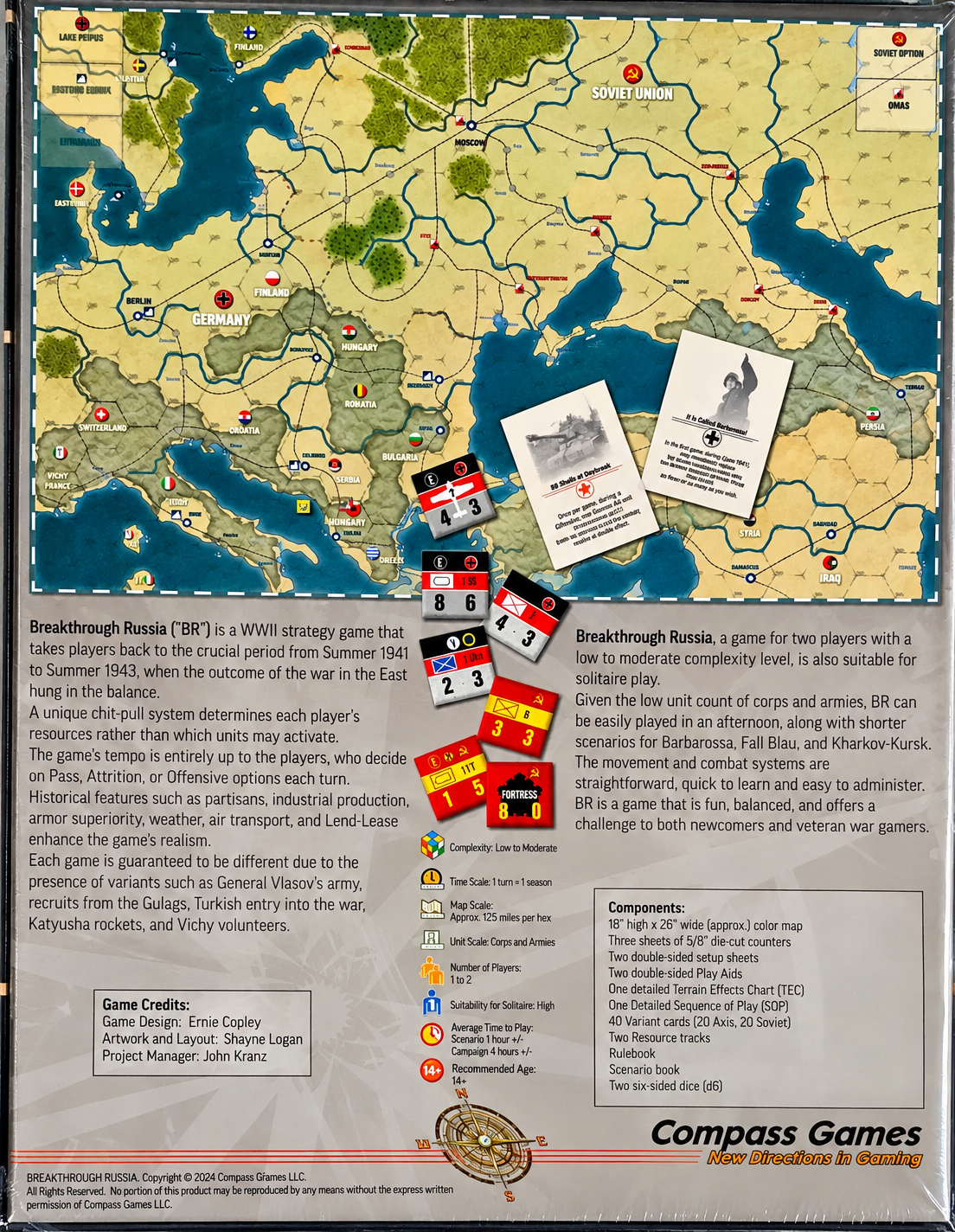 Image 2 of 2
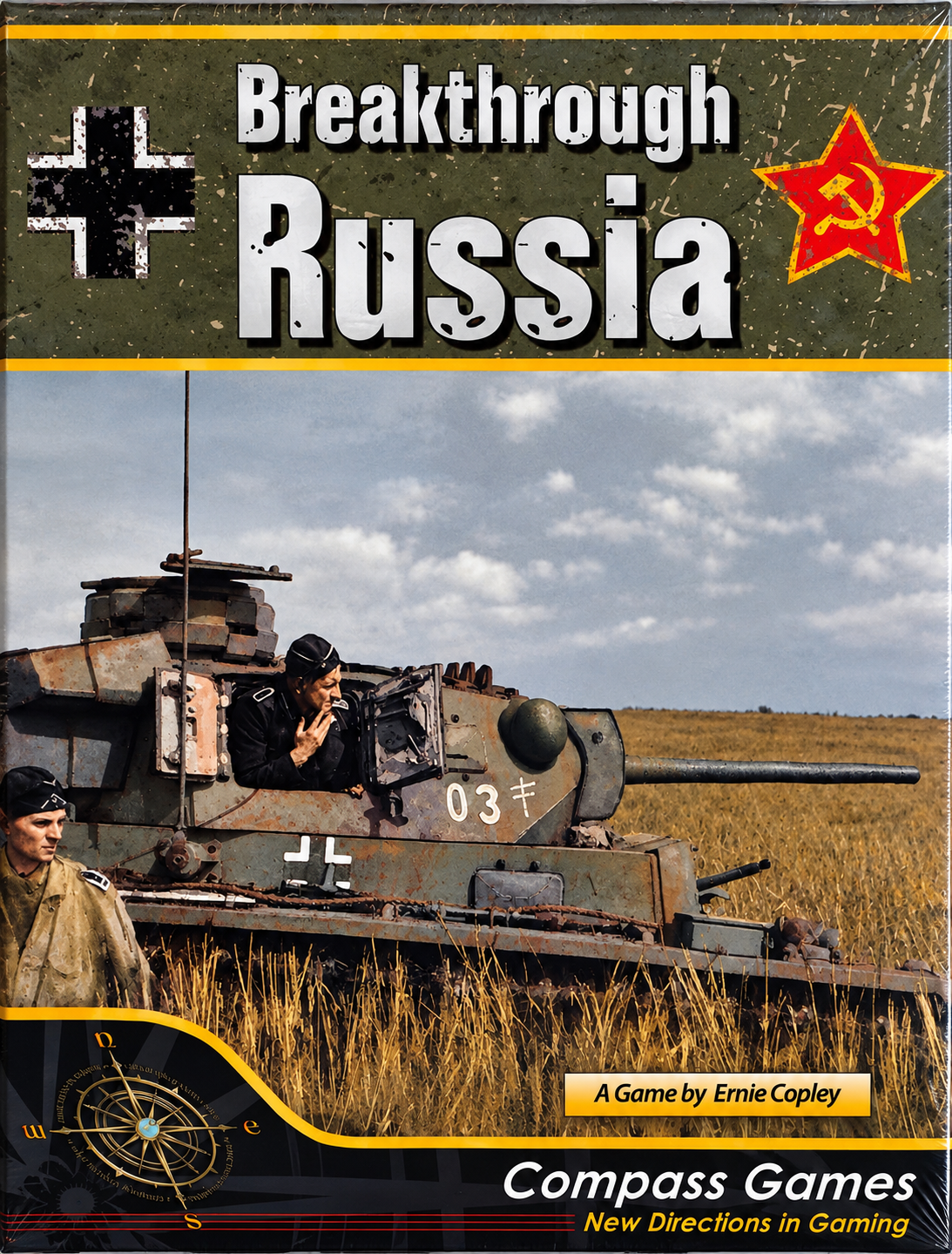
Breakthrough Russia is a World War II strategy wargame covering the Eastern Front from the summer of 1941 to the summer of 1943, a period when the outcome of the conflict between Germany and the Soviet Union remained uncertain. Players take command of Axis or Soviet forces, making strategic decisions across a vast theatre of operations where resources, timing and military strength can determine the course of the war.
Beginning with Germany's invasion of the Soviet Union in Operation Barbarossa, the game follows the major campaigns that shaped the fighting in the East, including the German summer offensive of 1942 and the battles around Kharkov and Kursk in 1943. Both sides must balance offensive ambitions with the need to preserve their armies, manage available resources and respond to changing battlefield conditions.
Designed with a relatively low number of playing pieces representing corps and armies, Breakthrough Russia offers a manageable approach to large-scale Eastern Front warfare. Its straightforward movement and combat systems allow players to concentrate on strategic planning rather than complicated rules, making it suitable for both newcomers and experienced historical wargamers.
This game includes:
1 Full-Colour Mounted Map (Approximately 18" × 26")
3 Sheets of 5/8" Die-Cut Counters
2 Double-Sided Setup Sheets
2 Double-Sided Player Aid Cards
1 Detailed Terrain Effects Chart
1 Detailed Sequence of Play Card
40 Variant Cards (20 Axis and 20 Soviet)
2 Resource Tracks
1 Rulebook
1 Scenario Book
2 Six-Sided Dice
Key Features:
Strategic-level recreation of the Eastern Front during World War II
Covers the major campaigns from summer 1941 to summer 1943
Includes shorter scenarios for Operation Barbarossa, Fall Blau and Kharkov-Kursk
Bonus scenario extending the conflict through to 1945
Unique chit-pull system determining available resources rather than unit activation
Player-controlled operational tempo through Pass, Attrition and Offensive options
Corps and army-level formations keep counter density manageable
Historical systems covering partisans, industrial production and armoured superiority
Weather, air transport and Lend-Lease influence military operations
40 variant cards introducing additional historical and alternative possibilities
Straightforward movement and combat mechanics
Suitable for two-player competition and solitaire play
Low-to-moderate complexity with scenarios that can be completed in approximately an hour
About the Game:
The German invasion of the Soviet Union in June 1941 opened one of the largest and most destructive campaigns of the Second World War. Initial Axis advances brought German armies deep into Soviet territory, but the vast distances, difficult weather and determined Soviet resistance gradually placed increasing pressure on their ability to sustain offensive operations.
In Breakthrough Russia, players face many of the strategic challenges that shaped this struggle. The Axis player must exploit early military advantages, maintain offensive momentum and make effective use of available resources before Soviet resistance becomes stronger.
The Soviet player must withstand the initial invasion, preserve essential formations and take advantage of growing industrial and military strength to challenge the German advance.
Rather than concentrating on individual tactical engagements, the game places emphasis on the wider campaign. Decisions about where to attack, when to conserve strength and how to allocate resources can have lasting consequences as the war develops.
A Different Approach to Strategic Warfare
One of the distinctive features of Breakthrough Russia is its chit-pull system. Unlike systems where chits determine which formations may activate, this mechanism establishes the resources available to each player.
Players then decide how to use those resources by selecting between three options:
Pass: Choose not to undertake an offensive or attrition action at that point.
Attrition: Focus on wearing down enemy strength.
Offensive: Commit resources to attacking and attempting to gain ground.
This approach gives players considerable control over the pace of operations while introducing uncertainty over the resources they will have available.
The game also incorporates historical factors that influenced the Eastern Front, including industrial production, partisan activity, differences in armoured capabilities, seasonal weather and Allied Lend-Lease assistance to the Soviet Union.
Air transport provides another operational consideration, while the interaction between these systems encourages players to adapt their plans as the situation changes.
Historical Campaigns and Alternative Possibilities
Breakthrough Russia provides several opportunities to explore the changing military situation on the Eastern Front.
The shorter scenarios focus on three important phases of the conflict:
Operation Barbarossa: The German invasion of the Soviet Union in 1941, when Axis forces attempted to achieve a decisive victory before Soviet resistance could fully develop.
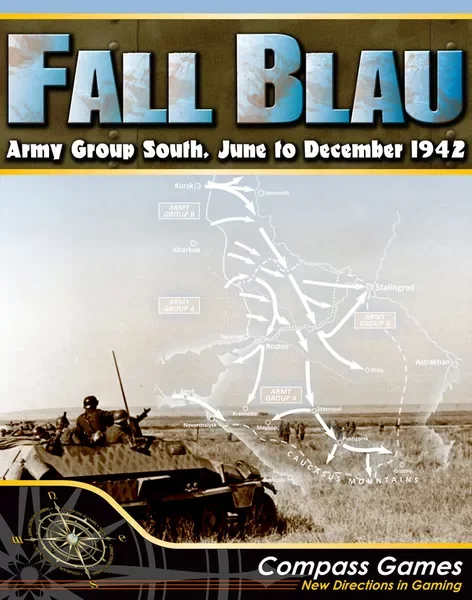
Fall Blau: The German summer offensive of 1942, which shifted the focus of operations towards southern Russia and the Caucasus.
Kharkov-Kursk: The fighting during 1943, when both armies sought to gain the initiative through major offensives and counterattacks.
The main campaign covers the period from summer 1941 to summer 1943, while an additional bonus scenario extends the conflict to the end of the war in 1945.
The game also includes 40 variant cards, divided equally between Axis and Soviet options, introducing alternative developments that can change the course of play.
These possibilities include General Vlasov's army, recruitment from the Soviet Gulags, potential Turkish involvement in the war, Katyusha rocket artillery and Vichy volunteers.
By combining historical campaigns with these variations, Breakthrough Russia allows players to explore how different circumstances and decisions might have influenced the outcome of the war.
Accessible Strategic Gameplay
Despite covering a vast geographical area and several years of warfare, Breakthrough Russia keeps the playing experience relatively straightforward.
The low counter density reduces the amount of unit management required, while the movement and combat rules are designed to be quick to learn and easy to administer.
Individual scenarios can generally be completed in around an hour, with the main campaign taking approximately four hours. This makes the game suitable for players who enjoy strategic-level wargaming but prefer a manageable playing time.
Its combination of historical detail, resource management and alternative scenarios also provides good replay value, whether played competitively against another player or explored solitaire.
Game Details:
Players: 1–2 (Designed for 2, Solitaire Suitable)
Playing Time: Approximately 1 Hour per Scenario; 4+ Hours for the Campaign
Complexity: Low to Moderate
Solitaire Suitability: High
Time Scale: 1 Turn = 1 Season
Map Scale: Approximately 125 Miles per Hex
Unit Scale: Corps and Armies
Historical Period: 1941–1943 (Bonus Scenario Extends to 1945)
Recommended Age: 14+
Breakthrough Russia offers an accessible examination of the Eastern Front, combining strategic decision-making with historical events and an unusual resource-based chit-pull system. With its shorter scenarios, extended campaign and alternative historical possibilities, the game provides an engaging challenge for players interested in exploring the changing fortunes of Axis and Soviet forces during the Second World War.