 Image 1 of 1
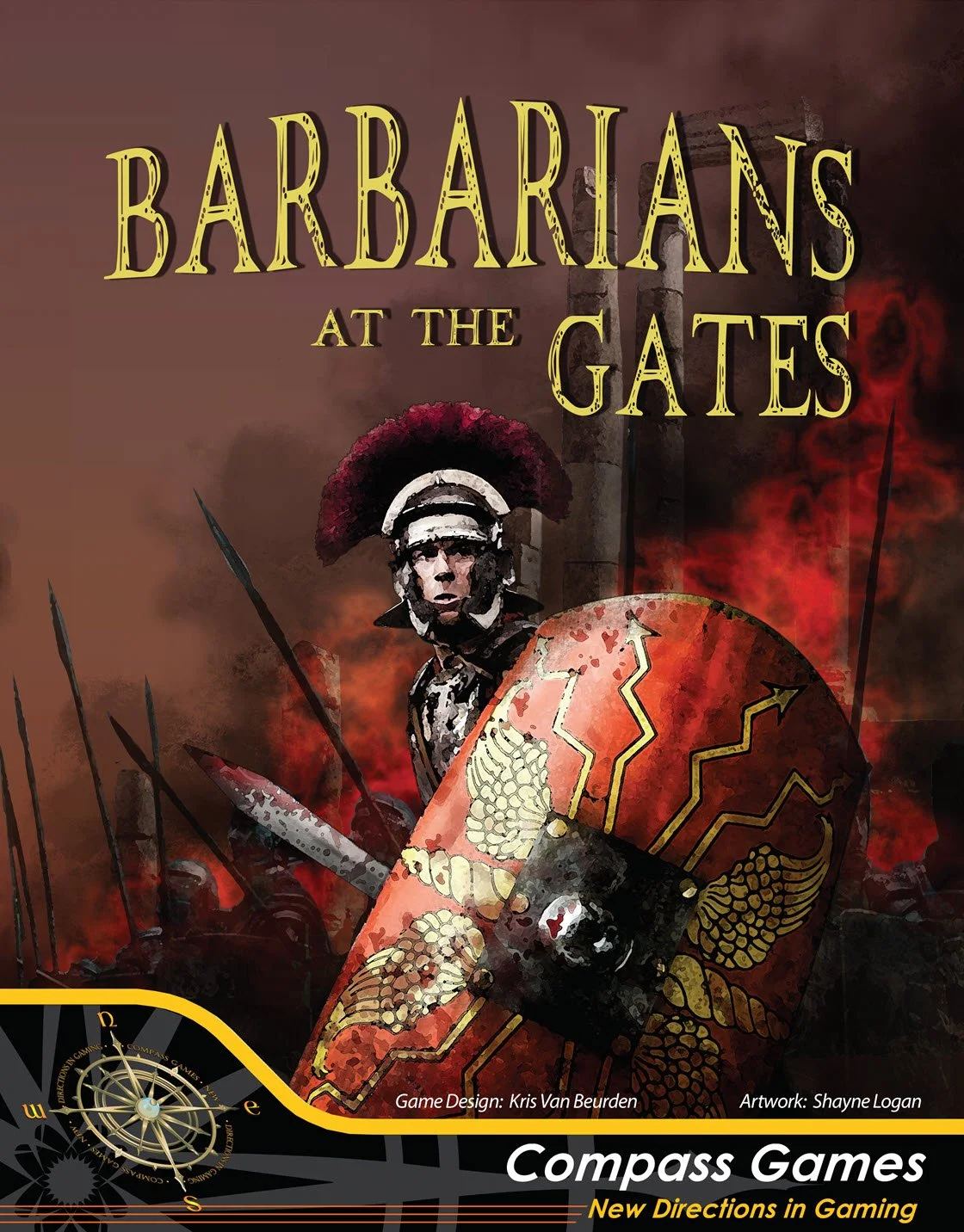
Barbarians at the Gates is a two-player, card-driven strategy game set during the final century of the Western Roman Empire. One player commands the struggling Roman authority and its legions, while the opposing player leads migrating tribes, rival leaders, and internal challengers seeking power.
The game captures the political instability, military pressure, and shifting alliances that defined this turbulent period in European history.
This game includes:
Mounted game map (22" x 34")
Rulebook
Playbook
2 player aid cards
110 strategy cards (2 decks of 55 cards each)
Counter sheets with large, rounded counters
2 dice
Box and lid set
Key features:
Two-player card-driven strategy system
Play as either the Roman Empire or opposing forces
Historical leaders with unique abilities
Point-to-point map using Roman roads and regions
Mix of military conflict, political manoeuvring, and migration
Multiple scenarios and full campaign play
About the game:
Set between 337 and 476 AD, the game places players in control of opposing forces during the collapse of Roman power in the West. The Roman player must defend key regions, maintain stability, and respond to multiple threats across the empire. Meanwhile, the opposing player directs tribal movements, launches invasions, and supports rival claimants to the imperial throne.
Gameplay revolves around card play, with each card used to activate leaders, move armies, initiate battles, recruit forces, or trigger events. Generals and leaders play a central role, with figures such as Roman commanders, rival emperors, and tribal leaders influencing the course of the game.
The map represents the Western Roman Empire through connected regions, reflecting road networks, rivers, and more difficult terrain. Positioning and timing are critical, as Roman forces must react quickly to threats while the opposing side looks to exploit weaknesses and expand influence.
Players can recreate key moments from history, including major invasions and political upheavals, or explore alternative outcomes through scenario and campaign play. Each session offers a different strategic challenge, with multiple paths to victory.
Game details:
Players: 1 or 2
Playtime: Around 2 hours per scenario, up to 5 hours for full campaign
Complexity: Medium
Solitaire suitability: Medium
Time scale: Approximately 10 years per turn
Map scale: Point-to-point representation of the Western Roman Empire
Unit scale: Approx. 5,000–10,000 troops per unit
Age: 14+
Barbarians at the Gates is a two-player, card-driven strategy game set during the final century of the Western Roman Empire. One player commands the struggling Roman authority and its legions, while the opposing player leads migrating tribes, rival leaders, and internal challengers seeking power.
The game captures the political instability, military pressure, and shifting alliances that defined this turbulent period in European history.
This game includes:
Mounted game map (22" x 34")
Rulebook
Playbook
2 player aid cards
110 strategy cards (2 decks of 55 cards each)
Counter sheets with large, rounded counters
2 dice
Box and lid set
Key features:
Two-player card-driven strategy system
Play as either the Roman Empire or opposing forces
Historical leaders with unique abilities
Point-to-point map using Roman roads and regions
Mix of military conflict, political manoeuvring, and migration
Multiple scenarios and full campaign play
About the game:
Set between 337 and 476 AD, the game places players in control of opposing forces during the collapse of Roman power in the West. The Roman player must defend key regions, maintain stability, and respond to multiple threats across the empire. Meanwhile, the opposing player directs tribal movements, launches invasions, and supports rival claimants to the imperial throne.
Gameplay revolves around card play, with each card used to activate leaders, move armies, initiate battles, recruit forces, or trigger events. Generals and leaders play a central role, with figures such as Roman commanders, rival emperors, and tribal leaders influencing the course of the game.
The map represents the Western Roman Empire through connected regions, reflecting road networks, rivers, and more difficult terrain. Positioning and timing are critical, as Roman forces must react quickly to threats while the opposing side looks to exploit weaknesses and expand influence.
Players can recreate key moments from history, including major invasions and political upheavals, or explore alternative outcomes through scenario and campaign play. Each session offers a different strategic challenge, with multiple paths to victory.
Game details:
Players: 1 or 2
Playtime: Around 2 hours per scenario, up to 5 hours for full campaign
Complexity: Medium
Solitaire suitability: Medium
Time scale: Approximately 10 years per turn
Map scale: Point-to-point representation of the Western Roman Empire
Unit scale: Approx. 5,000–10,000 troops per unit
Age: 14+