 Image 1 of 5
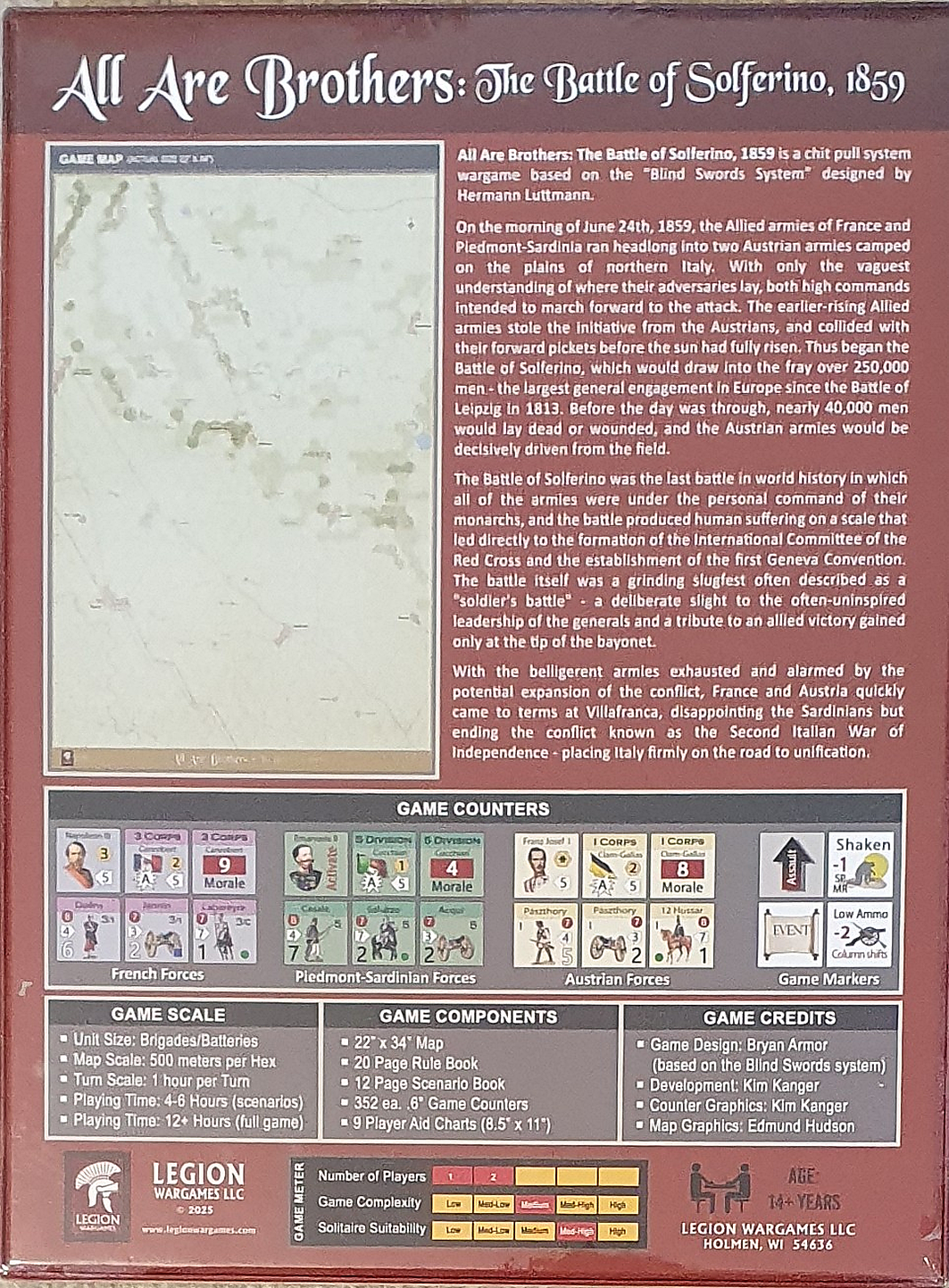 Image 2 of 5
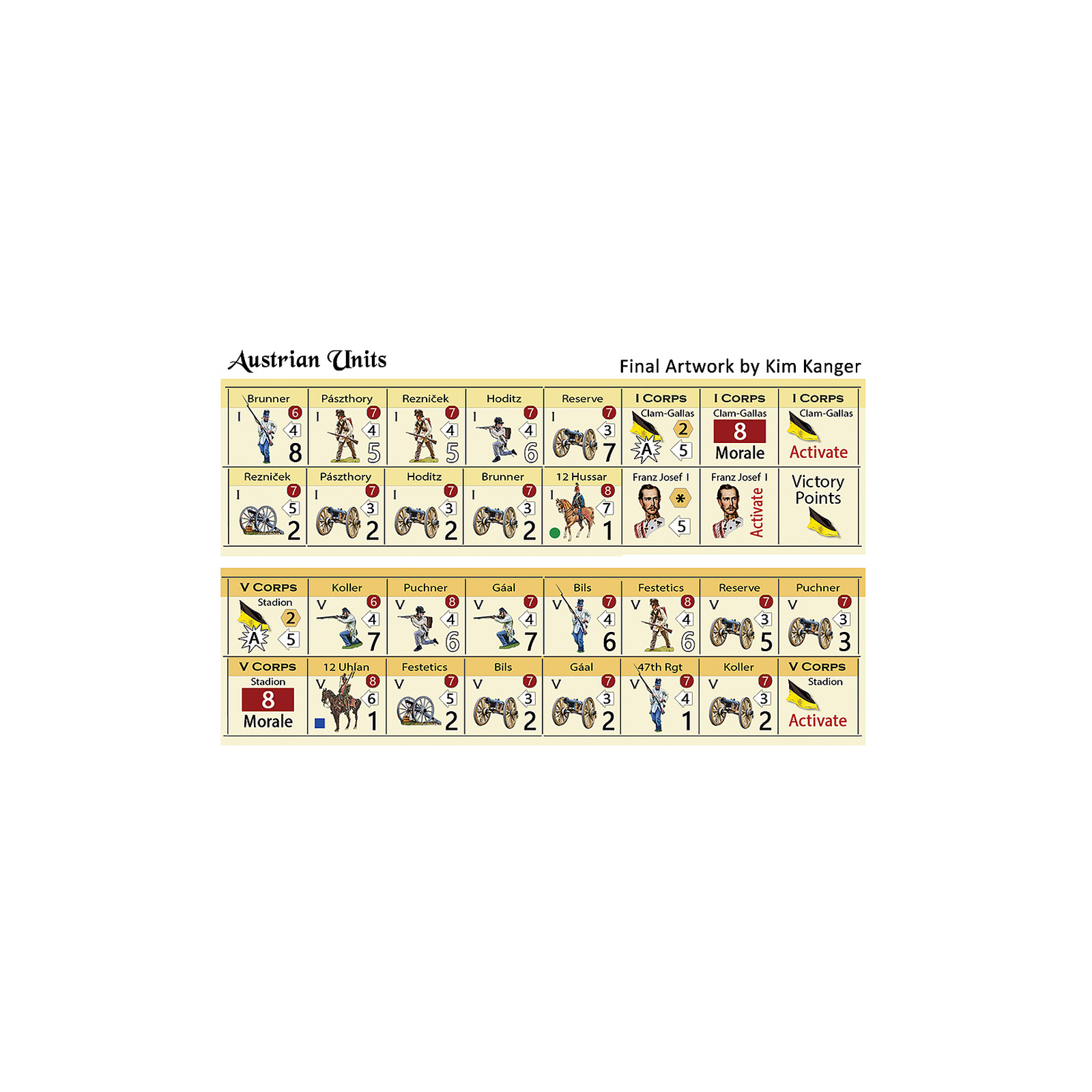 Image 3 of 5
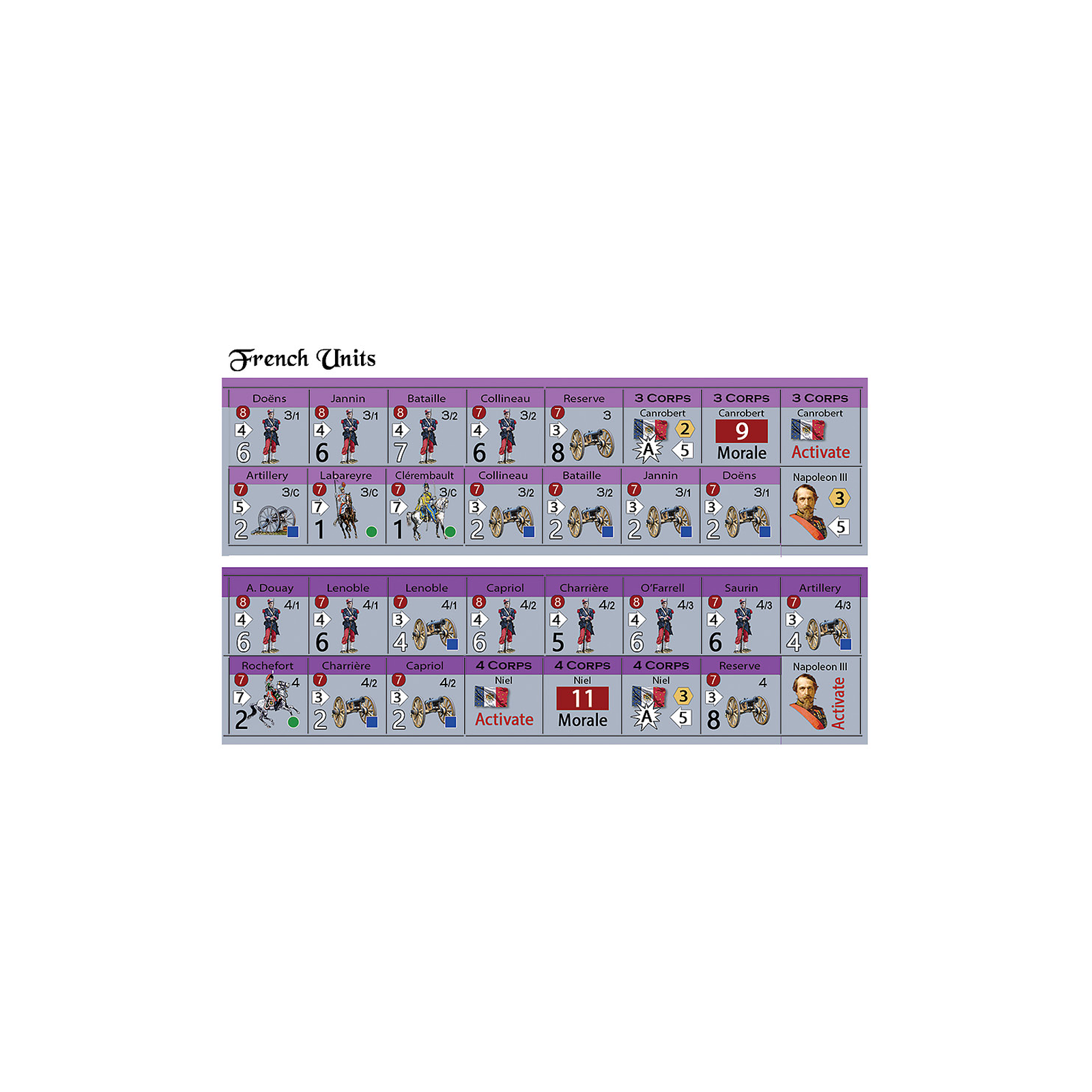 Image 4 of 5
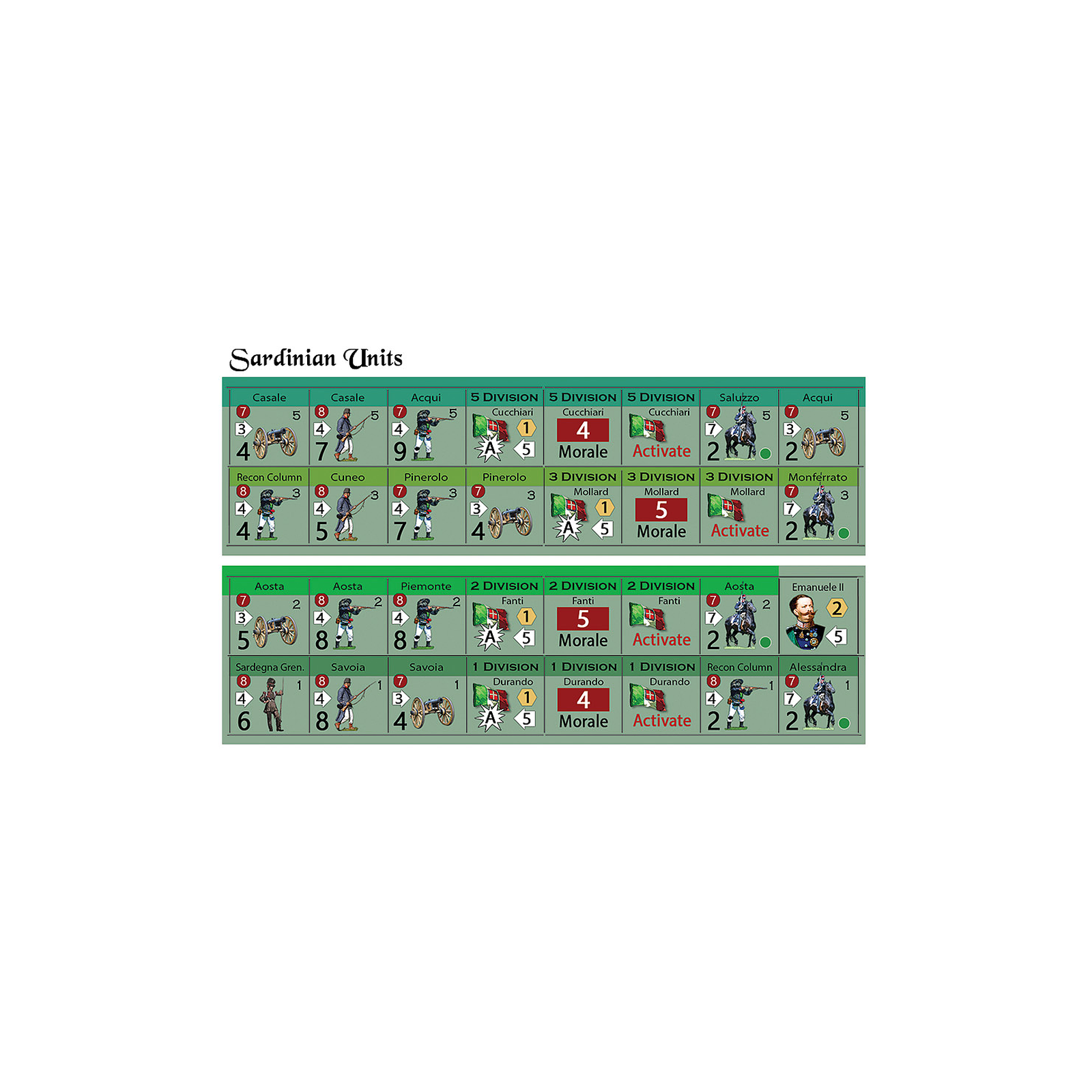 Image 5 of 5
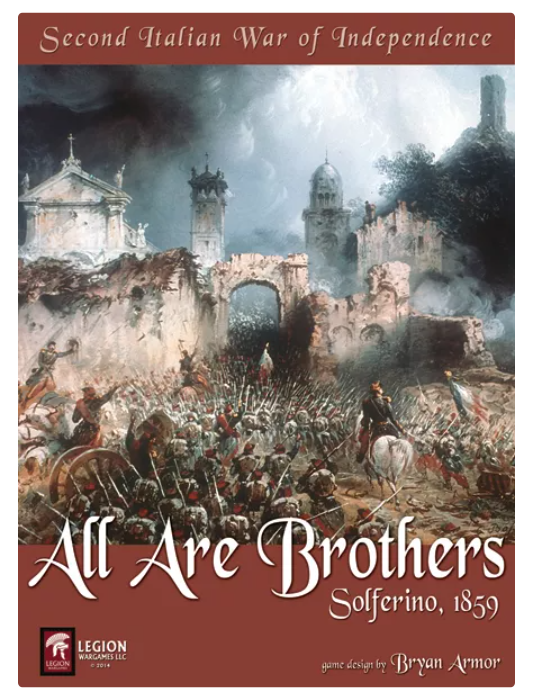
All Are Brothers: The Battle of Solferino, 1859 is a brigade-level wargame recreating the decisive clash of the Second Italian War of Independence. Using an adaptation of Hermann Luttmann's Blind Swords system, the game places players in command of the French and Piedmont-Sardinian forces or the Austrian armies during one of the largest and bloodiest European battles of the nineteenth century.
On the morning of 24 June 1859, the allied armies of France and Piedmont-Sardinia advanced across the plains of northern Italy with only limited knowledge of the location of their Austrian opponents. The Austrians were also preparing to advance, and the two sides unexpectedly collided before the sun had fully risen. What followed was a huge engagement involving more than 250,000 men and fierce fighting across the entire battlefield.
By the end of the day, nearly 40,000 men had been killed or wounded and the Austrian armies had been driven from the field. The scale of the suffering witnessed at Solferino would later contribute to the formation of the International Committee of the Red Cross and the establishment of the first Geneva Convention. The battle also proved decisive in bringing the war towards its conclusion, helping place Italy firmly on the path towards unification.
This game includes:
1 22" × 34" Map
1 20-Page Rulebook
1 12-Page Scenario Book
352 0.6" Game Counters
9 Player Aid Charts (8.5" × 11")
Key Features:
Brigade-level recreation of the Battle of Solferino, 1859
Adaptation of Hermann Luttmann's Blind Swords system
Chit-pull activation system creating uncertainty and fog of war
French, Piedmont-Sardinian and Austrian armies with period-specific forces
National, army and corps-level leaders
Variable activations and reinforcement tables
Strategic Initiative system
Nation-specific event chits
Move-and-countermove event chit play
Scenario variants and optional rules
Optional Encounter Battle system for alternative battle developments
Four scenarios covering individual sectors and the complete battle
Full battle supports up to four players
Strong suitability for solitaire play
About the Game:
The Battle of Solferino was fought across a broad front, with French and Piedmont-Sardinian forces confronting two Austrian armies in a confused encounter battle. Players command formations ranging primarily from brigades and battalions, with some smaller detachments also represented, while national, army and corps commanders influence operations across the battlefield.
The armies include a wide variety of formations characteristic of the period, including Austrian Jägers and Grenzers, cavalry formations, Piedmont-Sardinian Bersaglieri, the French Imperial Guard, Zouaves and Turcos. The battle took place at a time when improvements in infantry and artillery firepower were beginning to expose the increasing cost of traditional battlefield tactics.
At the heart of the game is a chit-pull activation system, which introduces uncertainty over when formations will act and helps reproduce the confused nature of the historical battle. Variable activation rules, reinforcement tables and event chits add further unpredictability, requiring players to adapt their plans as the situation develops rather than relying on a fixed sequence of actions.
The Strategic Initiative system and move-and-countermove event chit play provide additional interaction between opposing commanders. Nation-specific event chits bring further historical character, while optional rules and scenario variants allow players to adjust how individual battles develop.
Four scenarios are provided. Three focus separately on the northern, central and southern sectors of the battlefield, allowing individual portions of Solferino to be played independently. The northern San Martino scenario is the smallest and provides an accessible introduction to the game's rules. A fourth scenario combines the entire battlefield and can accommodate up to four players controlling France, Piedmont-Sardinia, the Austrian 1st Army and Austrian 2nd Army.
An optional Encounter Battle system can alter starting positions and reinforcement conditions, allowing the battle to unfold differently from its historical course while retaining the armies and operational circumstances of the campaign.
All Are Brothers: The Battle of Solferino, 1859 combines the uncertainty of the Blind Swords system with a detailed treatment of a major nineteenth-century battle, giving players the opportunity to explore both the individual sectors of the fighting and the complete struggle for Solferino.
Game Details:
Players: 1–4
Playing Time: 4–6 Hours (scenarios); 12+ Hours (full game)
Complexity: Medium
Solitaire Suitability: Medium
Turn Scale: 1 Hour per Turn
Map Scale: 500 Metres per Hex
Unit Scale: Brigades/Battalions
Age: 14+