 Image 1 of 2
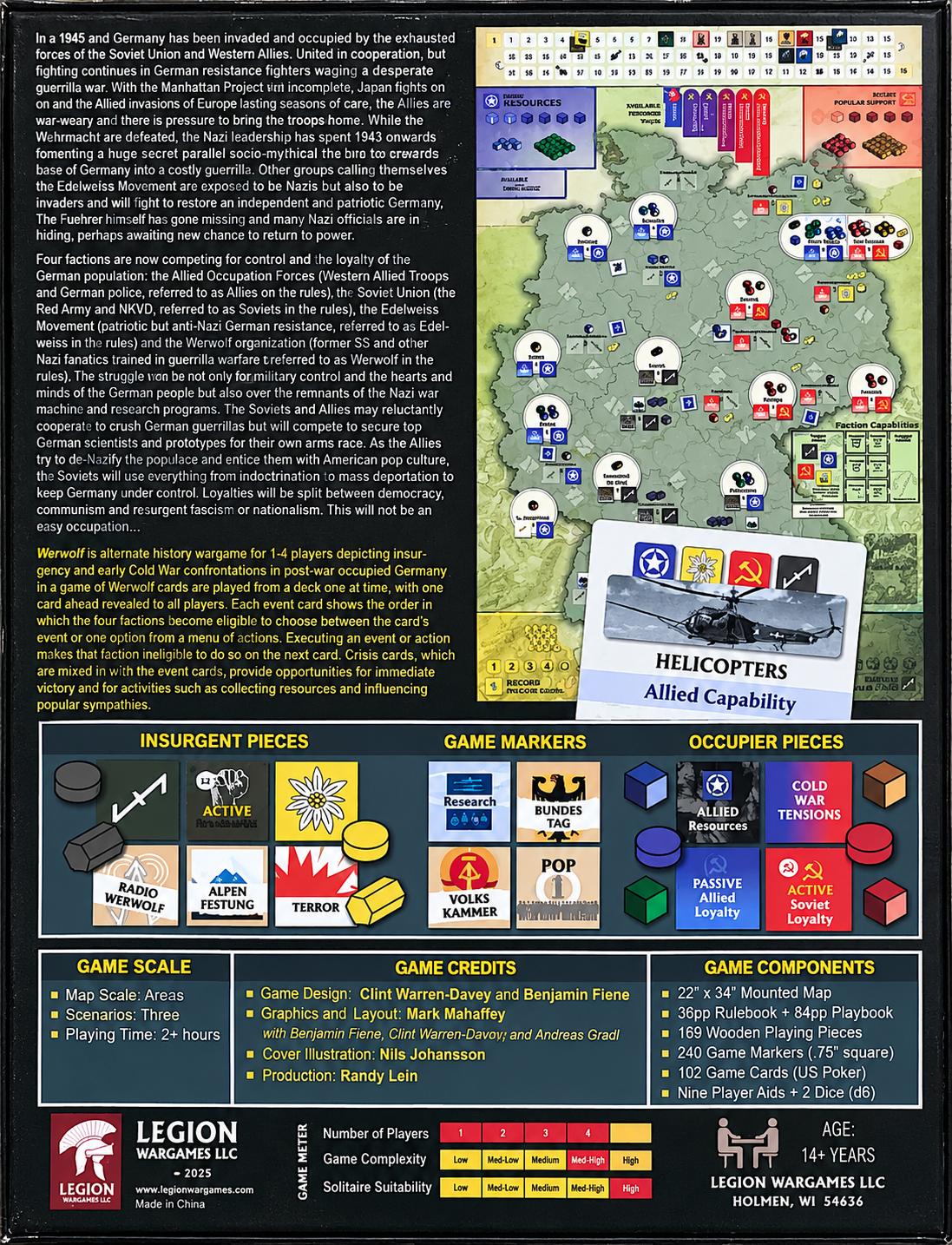 Image 2 of 2
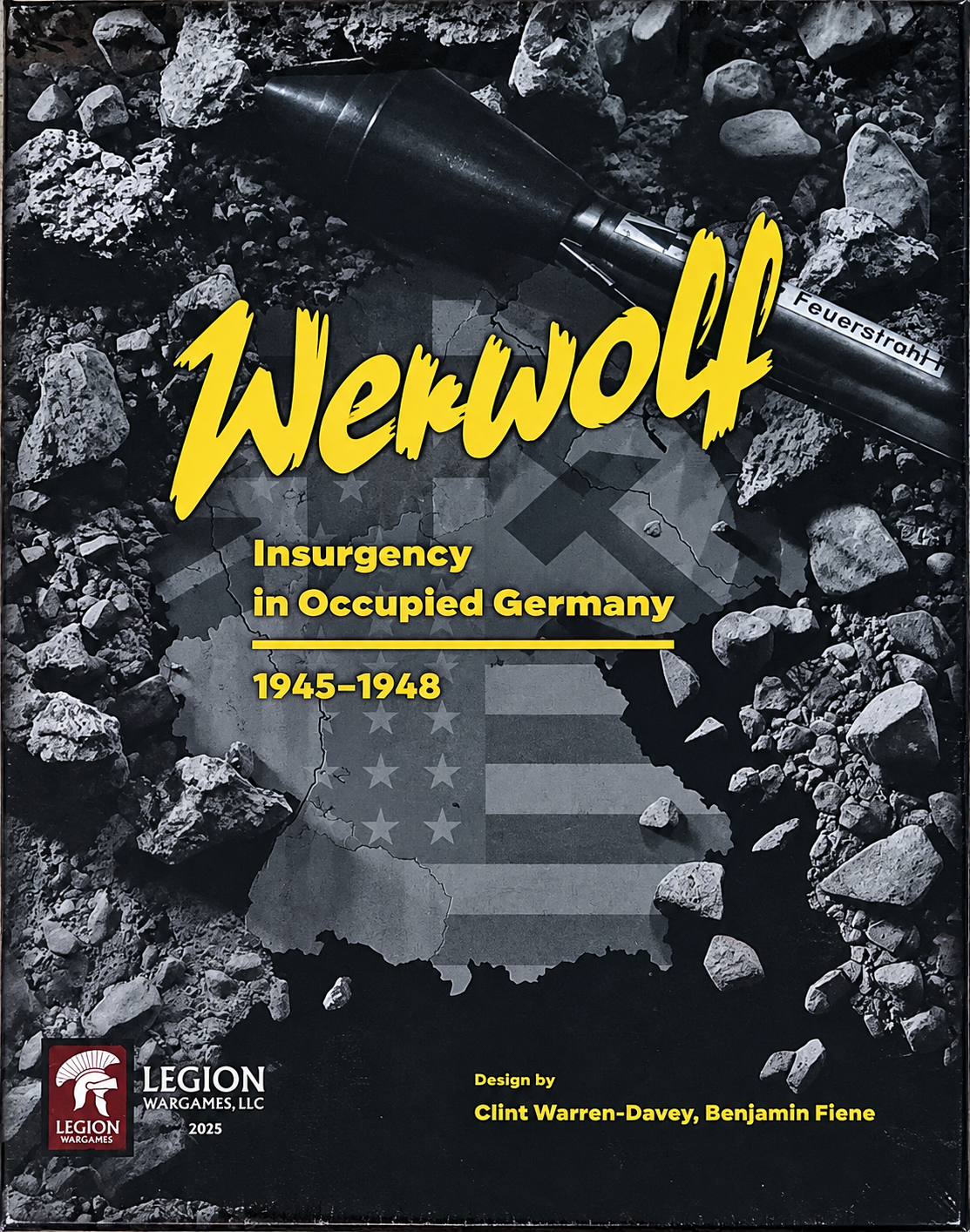
Werwolf: Insurgency in Occupied Germany, 1945–1948 is an alternate-history wargame depicting insurgency and emerging Cold War confrontation in a post-war Germany where the fighting did not end in 1945. Germany has been occupied by the exhausted forces of the Western Allies and Soviet Union, but organised German resistance has turned the occupation into a continuing struggle.
In this alternative timeline, the Manhattan Project remains incomplete, Japan is still fighting, and the Allied invasion of Europe has cost millions of men. With increasing pressure to bring Allied troops home, maintaining control of Germany becomes increasingly difficult. Although the Wehrmacht has been defeated, the Nazi leadership has spent years preparing the secret Werwolf organisation to wage a prolonged guerrilla campaign against the occupying forces.
At the same time, the Edelweiss Movement opposes both the Nazis and the foreign occupation, seeking an independent Germany of its own. Hitler has disappeared, numerous Nazi officials remain in hiding, and the country has become the setting for a four-way struggle involving military control, political influence, popular loyalty and the surviving resources of the German war machine.
This game includes:
1 22" × 34" Mounted Map
1 36-Page Rulebook
1 64-Page Playbook
169 Wooden Playing Pieces
240 Game Markers, including 75 Square Markers
102 Poker-Sized Game Cards
9 Player Aids
2 Six-Sided Dice
Key Features:
Alternate-history conflict set in occupied Germany after 1945
Four competing factions with different political and military objectives
Allied, Soviet, Edelweiss and Werwolf forces
Card-driven system combining events and faction operations
Eligibility system requiring careful decisions about when to act
Insurgency, occupation and political influence represented within the same system
Competition for resources, German scientists and surviving military research
Popular sympathies and loyalty form an important part of the struggle
Crisis cards can create opportunities for immediate victory and other major developments
Three scenarios
Designed for 1–4 players
About the Game:
Four factions compete for control and the loyalty of the German population. The Allied Occupation Forces consist of Western Allied troops and German police, while the Soviet Union is represented by the Red Army and NKVD. Opposing them are two very different German movements: the anti-Nazi Edelweiss Movement and Werwolf, formed from former SS personnel and other Nazi loyalists trained in guerrilla warfare.
The Western Allies and Soviets may find themselves cooperating to suppress German insurgents, but their alliance is increasingly fragile. Both sides also seek to secure German scientists, prototypes and surviving research programmes as competition between the former wartime partners begins to develop into a new geopolitical confrontation.
Werwolf is played using a deck of event cards, with one upcoming card revealed in advance. Each card determines the order in which the four factions become eligible to act. When eligible, a faction may choose the card's event or carry out one of its available actions. Acting makes that faction ineligible on the following card, forcing players to decide whether an immediate opportunity is worth sacrificing their chance to act next.
Crisis cards are mixed into the event deck and can provide opportunities for immediate victory while also triggering activities such as collecting resources and influencing popular sympathies. This creates a shifting contest in which military operations alone are not enough; players must also consider political control, resources and the loyalty of the population.
With the occupying powers pursuing their own agendas and two very different German resistance movements fighting for the country's future, Werwolf: Insurgency in Occupied Germany, 1945–1948 combines guerrilla warfare, political competition and early Cold War rivalry in an alternative post-war setting.
Game Details:
Players: 1–4
Playing Time: 2+ Hours
Complexity: Varies by Player Count
Solitaire Suitability: Varies by Player Count
Map Scale: Areas
Scenarios: 3
Age: 14+
Werwolf: Insurgency in Occupied Germany, 1945–1948 is an alternate-history wargame depicting insurgency and emerging Cold War confrontation in a post-war Germany where the fighting did not end in 1945. Germany has been occupied by the exhausted forces of the Western Allies and Soviet Union, but organised German resistance has turned the occupation into a continuing struggle.
In this alternative timeline, the Manhattan Project remains incomplete, Japan is still fighting, and the Allied invasion of Europe has cost millions of men. With increasing pressure to bring Allied troops home, maintaining control of Germany becomes increasingly difficult. Although the Wehrmacht has been defeated, the Nazi leadership has spent years preparing the secret Werwolf organisation to wage a prolonged guerrilla campaign against the occupying forces.
At the same time, the Edelweiss Movement opposes both the Nazis and the foreign occupation, seeking an independent Germany of its own. Hitler has disappeared, numerous Nazi officials remain in hiding, and the country has become the setting for a four-way struggle involving military control, political influence, popular loyalty and the surviving resources of the German war machine.
This game includes:
1 22" × 34" Mounted Map
1 36-Page Rulebook
1 64-Page Playbook
169 Wooden Playing Pieces
240 Game Markers, including 75 Square Markers
102 Poker-Sized Game Cards
9 Player Aids
2 Six-Sided Dice
Key Features:
Alternate-history conflict set in occupied Germany after 1945
Four competing factions with different political and military objectives
Allied, Soviet, Edelweiss and Werwolf forces
Card-driven system combining events and faction operations
Eligibility system requiring careful decisions about when to act
Insurgency, occupation and political influence represented within the same system
Competition for resources, German scientists and surviving military research
Popular sympathies and loyalty form an important part of the struggle
Crisis cards can create opportunities for immediate victory and other major developments
Three scenarios
Designed for 1–4 players
About the Game:
Four factions compete for control and the loyalty of the German population. The Allied Occupation Forces consist of Western Allied troops and German police, while the Soviet Union is represented by the Red Army and NKVD. Opposing them are two very different German movements: the anti-Nazi Edelweiss Movement and Werwolf, formed from former SS personnel and other Nazi loyalists trained in guerrilla warfare.
The Western Allies and Soviets may find themselves cooperating to suppress German insurgents, but their alliance is increasingly fragile. Both sides also seek to secure German scientists, prototypes and surviving research programmes as competition between the former wartime partners begins to develop into a new geopolitical confrontation.
Werwolf is played using a deck of event cards, with one upcoming card revealed in advance. Each card determines the order in which the four factions become eligible to act. When eligible, a faction may choose the card's event or carry out one of its available actions. Acting makes that faction ineligible on the following card, forcing players to decide whether an immediate opportunity is worth sacrificing their chance to act next.
Crisis cards are mixed into the event deck and can provide opportunities for immediate victory while also triggering activities such as collecting resources and influencing popular sympathies. This creates a shifting contest in which military operations alone are not enough; players must also consider political control, resources and the loyalty of the population.
With the occupying powers pursuing their own agendas and two very different German resistance movements fighting for the country's future, Werwolf: Insurgency in Occupied Germany, 1945–1948 combines guerrilla warfare, political competition and early Cold War rivalry in an alternative post-war setting.
Game Details:
Players: 1–4
Playing Time: 2+ Hours
Complexity: Varies by Player Count
Solitaire Suitability: Varies by Player Count
Map Scale: Areas
Scenarios: 3
Age: 14+