 Image 1 of 2
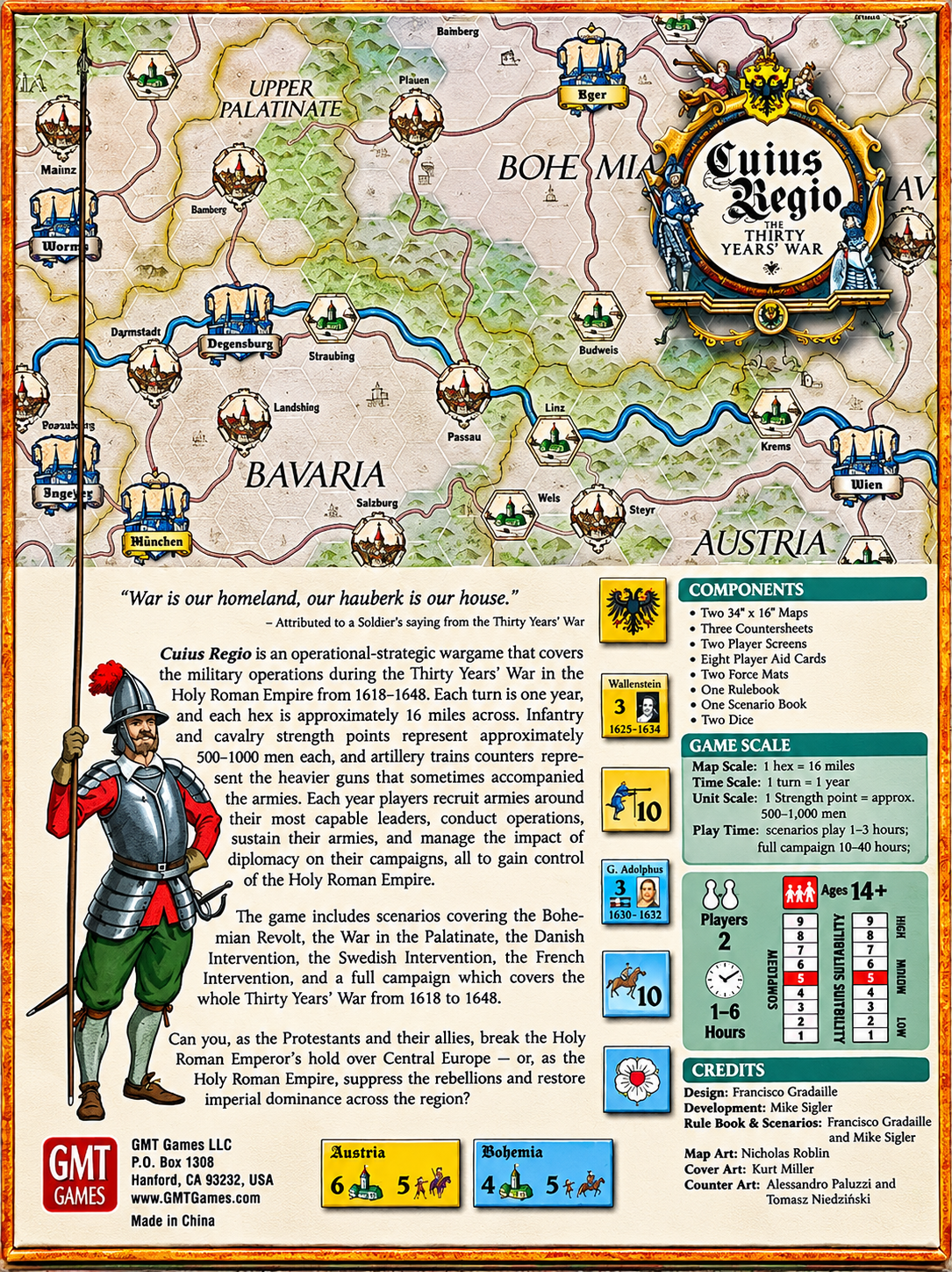 Image 2 of 2
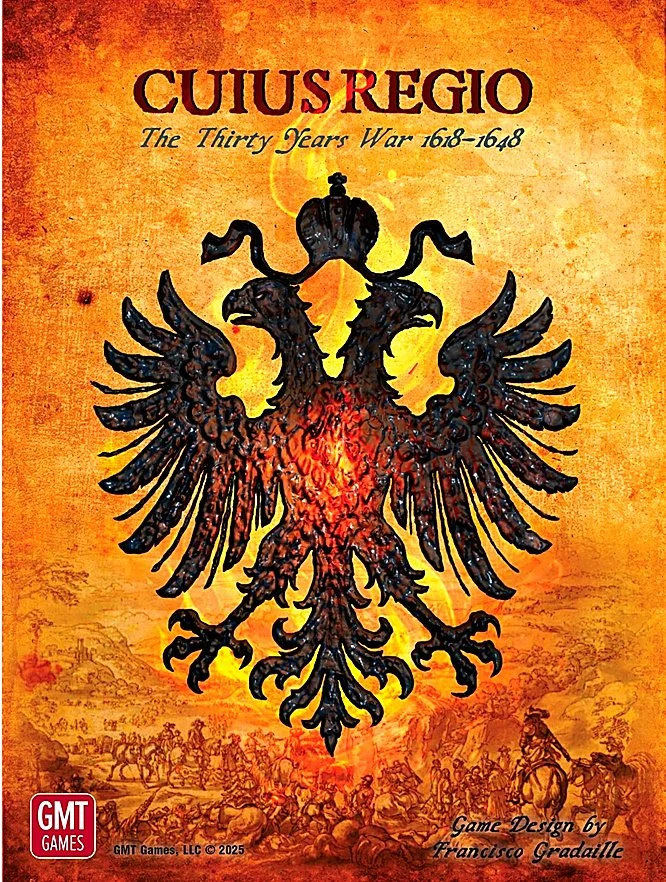
Cuius Regio explores the operational military aspects of this pivotal period in European history and focuses on the maneuvers and battles that shook Europe for three decades.
"War is our homeland, our hauberk is our house."
— Attributed to a soldier during the Thirty Years War
Cuius Regio: The Thirty Years War is a two-player operational-strategic wargame covering the military campaigns of the Thirty Years War (1618–1648) within the Holy Roman Empire. Designed by Francisco Gradaille, the game focuses on the movement of armies, military leadership, battles, sieges and the struggle for control of Central Europe during one of its most destructive conflicts.
The war began in May 1618 with the Defenestration of Prague, when Protestant nobles threw two imperial regents and their secretary from a window of Prague Castle. What began as a religious and political dispute developed into a prolonged European conflict involving the major powers of the period.
In Cuius Regio, players command the Protestant forces and their allies or the armies of the Holy Roman Emperor. Each side must recruit troops, appoint capable leaders, maintain supplies and conduct military operations while managing the diplomatic consequences of their campaigns.
The game includes scenarios covering the major phases of the war, from the Bohemian Revolt to the French Intervention, as well as a complete campaign spanning 1618 to 1648.
This game includes:
2 Maps (34" x 16" each)
3 Countersheets
2 Player Screens
8 Player Aid Cards
2 Force Mats
1 Rulebook
1 Scenario Book
2 Dice
Key Features:
Two-player operational-strategic wargame covering the Thirty Years War (1618–1648)
Command Protestant and allied forces or the armies of the Holy Roman Emperor
Five scenarios covering the major phases of the conflict and the complete war
Recruit armies, appoint leaders and conduct military operations across Central Europe
Manage supplies, army fatigue and the effects of prolonged campaigning
Leadership ratings influence army command and battlefield effectiveness
Seasonal campaign system covering summer and winter operations
Integrated combat system for field battles and sieges
Military operations and diplomacy influence control of the Holy Roman Empire
Shorter scenarios and a full 31-turn campaign offer different levels of commitment
About the Game:
The Thirty Years War was fought across much of Central Europe, beginning with the Bohemian Revolt in 1618 and ending with the Peace of Westphalia in 1648.
Although religion and politics played important roles in the conflict, military campaigns had a devastating effect on the population. Armies moved repeatedly through contested territories, capturing cities, conducting sieges and securing resources to sustain their forces.
With limited supply systems and large numbers of mercenary soldiers, armies frequently relied on the surrounding countryside for provisions. Maintaining an effective fighting force was therefore as important as winning battles.
Cuius Regio recreates these challenges at an operational-strategic level, placing players in command of armies campaigning across the Holy Roman Empire.
Each turn represents one year, divided into summer and winter seasons. Players move their armies, capture cities, gather supplies and prepare for further operations.
The number of armies activated influences the duration of a turn, while repeated operations increase fatigue and reduce an army's effectiveness. This requires players to consider how aggressively to campaign and when to preserve their forces.
Military Leadership and Combat
Leadership plays an important role in determining the effectiveness of each army.
Commanders have individual Leadership Ratings that influence the number of troops they can command and their performance during military operations.
Players must consider army composition, available resources and the condition of their forces when planning battles or sieges.
Combat uses an integrated system for field engagements and sieges, with results determined by a die roll modified by leadership, army composition and condition.
The system allows players to concentrate on campaign planning and strategic decisions while retaining the importance of battlefield leadership.
Historical Scenarios and Campaigns
The game includes scenarios covering the principal stages of the Thirty Years War:
The Bohemian Revolt (1618–1625)
The War in the Palatinate
The Danish Intervention (1625–1630)
The Swedish Intervention (1630–1635)
The French Intervention (1635–1648)
The Full Thirty Years War Campaign (1618–1648)
Players can explore individual phases of the conflict or undertake the complete 31-turn campaign, following the changing military and political situation across three decades of warfare.
The shorter scenarios provide a more manageable playing experience, while the full campaign offers a much broader strategic challenge.
Game Details:
Players: 2
Playing Time: 1–6 Hours for Scenarios; 30–40 Hours for the Full Campaign
Complexity: Medium (5/9)
Solitaire Suitability: Medium (5/9)
Time Scale: 1 Turn = 1 Year
Map Scale: Approximately 16 Miles per Hex
Unit Scale: Approximately 500–1,000 Men per Strength Point
Historical Period: 1618–1648
Theatre: Holy Roman Empire / Central Europe
Game Type: Operational-Strategic Historical Wargame
Recommended Age: 14+
Cuius Regio: The Thirty Years War offers a detailed examination of the military campaigns that shaped Central Europe between 1618 and 1648. Combining army manoeuvres, leadership, supply management, battles and sieges, it provides a challenging strategic experience across individual historical scenarios or the complete Thirty Years War campaign.