 Image 1 of 2
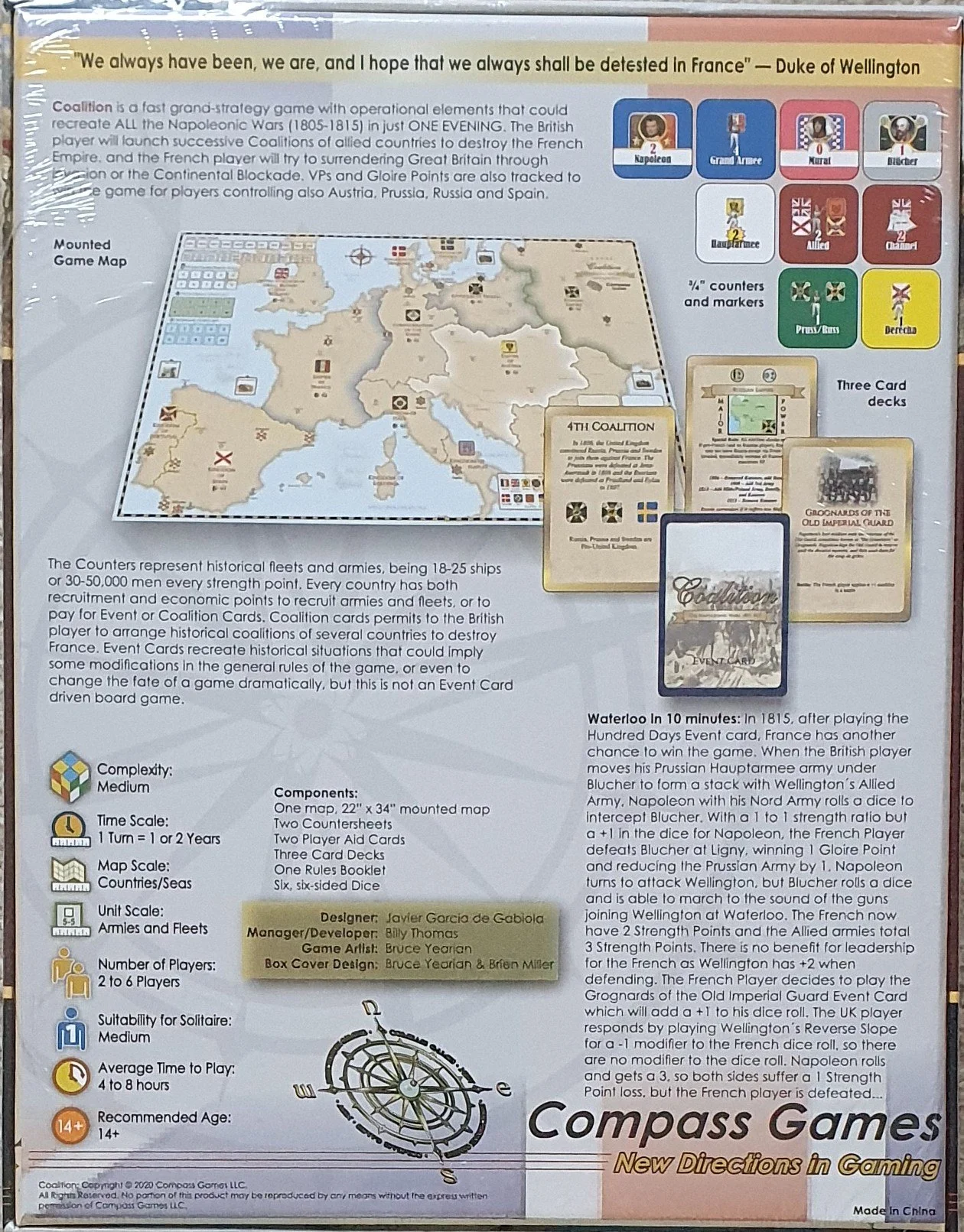 Image 2 of 2
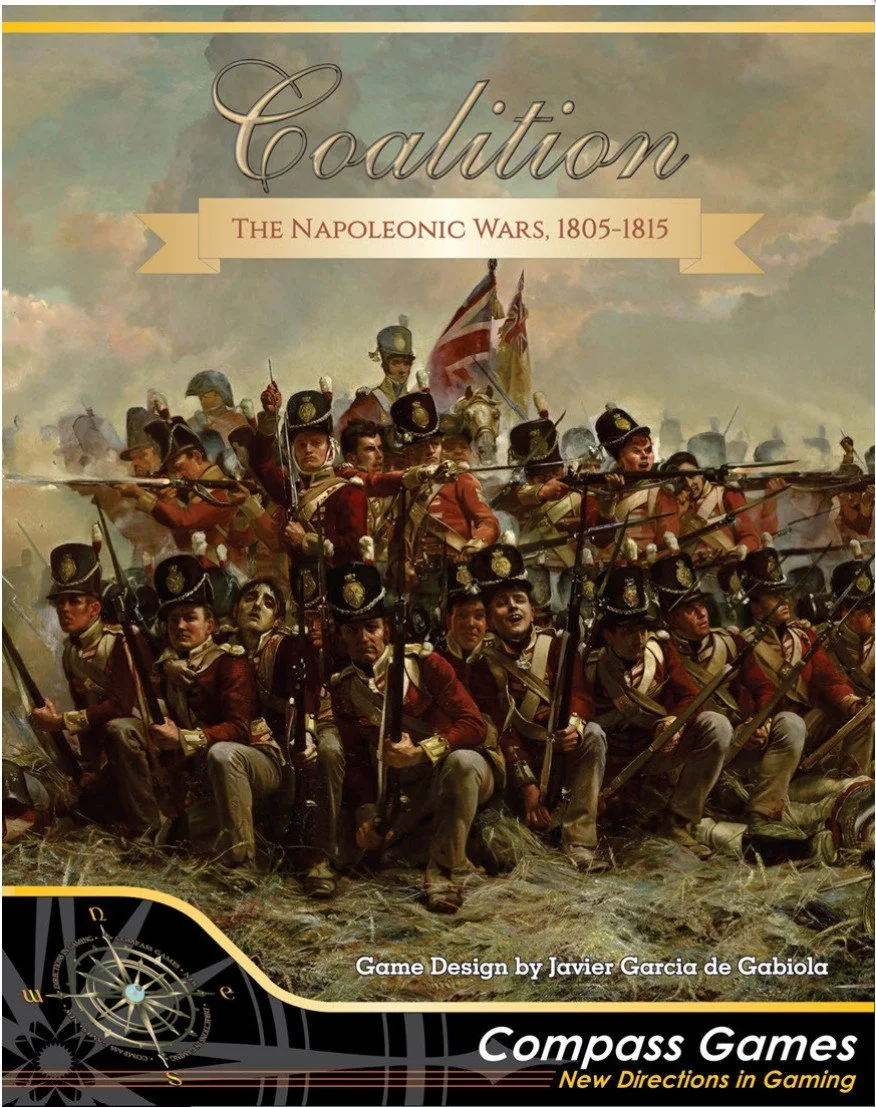
Coalition! The Napoleonic Wars, 1805–1815 is a grand-strategy wargame covering ten years of conflict between Napoleonic France and the European powers determined to defeat it. Designed for two to six players, the game combines military campaigns, diplomacy, economic management and historical events, allowing players to recreate the major struggles of the Napoleonic Wars in a single evening.
From Napoleon's victory at Austerlitz to his final defeat at Waterloo, players command the armies and fleets of Europe's great powers, form alliances and make strategic decisions that could change the course of history. While the game operates primarily at a grand-strategic level, it also incorporates operational elements, including army manoeuvres, interception and the ability to march to the sound of the guns.
In the two-player game, Britain leads successive coalitions of European nations in an attempt to defeat France and bring down Napoleon's Empire. The French player must withstand these alliances while pursuing victory through military success, the accumulation of Gloire and Victory Points, or by forcing Britain into submission through the Continental Blockade.
With three to six players, the game becomes a wider contest between the major European powers. Each player controls a nation with its own interests and objectives, competing for influence, military success and the points needed to achieve victory.
This game includes:
1 Full-Colour Mounted Game Map (22" × 34")
2 Countersheets with 3/4" Playing Counters
3 Decks of Playing Cards (56 Cards in Total)
2 Player Aid Cards
1 Rules Booklet
6 Six-Sided Dice
Key Features:
Grand-strategy recreation of the Napoleonic Wars from 1805 to 1815
Covers the major campaigns and political struggles from Austerlitz to Waterloo
Designed for 2–6 players, with different strategic challenges depending on player count
Britain forms successive coalitions to challenge Napoleonic France
France can pursue victory through military success, Gloire Points or the Continental Blockade
Multiplayer games allow individual powers to compete for their own objectives
Historical commanders, including Napoleon, Wellington and Blücher, influence military operations
Army and fleet counters represent large military formations
Economic and recruitment systems determine the ability to raise and maintain forces
Coalition Cards allow Britain to organise historical alliances
Event Cards introduce historical situations and alternative developments
Operational manoeuvres include interception and marching to the sound of the guns
Combat takes account of army strength, leadership and card effects
Mounted 22" × 34" map covering the principal European powers
Medium-complexity gameplay designed to cover an entire decade of warfare in one session
About the Game:
The Napoleonic Wars transformed Europe as France, under Napoleon Bonaparte, challenged the established balance of power. Between 1805 and 1815, a succession of military campaigns, shifting alliances and political struggles determined the future of the continent.
In Coalition!, players take control of the major powers involved in these conflicts, making decisions that influence both military operations and the wider political situation.
The British player seeks to unite European nations against France, organising successive coalitions and supporting military operations intended to weaken Napoleon's position.
The French player faces the challenge of confronting these alliances while maintaining control of the Empire. Victory may come through successful campaigns and the accumulation of Gloire and Victory Points, or through the Continental Blockade, an economic strategy intended to force Britain into submission.
Austria, Prussia, Russia and Spain also play important roles. In games with three to six participants, individual players can control these powers, pursuing their own interests rather than simply supporting one of the two principal opponents.
This creates a strategic contest in which alliances, military strength and national ambitions can influence the outcome of the war.
Grand Strategy and Military Operations
Although Coalition! covers the whole of Europe, the game keeps its military system manageable by representing armies and fleets as large formations rather than individual regiments or battalions.
Army counters represent approximately 30,000–50,000 men per Strength Point, while fleet counters represent around 18–25 ships per Strength Point.
Players must decide where to concentrate their forces, which territories to defend and when to launch offensives. Military strength alone does not guarantee victory, as the abilities of historical commanders and the timing of manoeuvres can have a considerable effect on combat.
Operational rules allow armies to intercept enemy movements or march towards nearby battles to support friendly forces.
These mechanics introduce some of the uncertainty associated with Napoleonic campaigning, where the timely arrival of reinforcements or the failure to coordinate separate armies could decide the outcome of an engagement.
Coalitions, Recruitment and Economic Power
The formation of alliances is one of the central features of Coalition!.
Each major power has economic and recruitment resources that can be used to raise armies and fleets or support the use of Event and Coalition Cards.
For Britain, building effective coalitions is essential to maintaining pressure on France. Coalition Cards allow the British player to assemble historical combinations of European powers, creating opportunities for coordinated military action against Napoleon.
France must respond to these threats while balancing the demands of military operations, economic resources and political objectives.
In multiplayer games, the competing ambitions of individual powers add another dimension, as players must consider their own opportunities for victory alongside the wider conflict.
Historical Events and Alternative Outcomes
The game includes three decks of cards representing historical events, coalitions and other developments that can influence the course of play.
Event Cards recreate situations from the Napoleonic period and may introduce changes to the normal rules, modify combat or create new strategic opportunities.
These cards are important to the historical atmosphere of the game, but Coalition! is not driven entirely by card play. Military decisions, economic management and the positioning of armies remain central to the outcome.
The combination of historical events and player decisions allows familiar campaigns to develop differently, providing opportunities to explore alternative outcomes.
From Austerlitz to Waterloo
One of the distinctive aspects of Coalition! is its ability to represent major historical campaigns without requiring players to recreate every individual battle in detail.
The Waterloo campaign of 1815 provides a good example.
Following the Hundred Days Event, Napoleon's Armée du Nord confronts the Allied forces commanded by Wellington and the Prussian army under Blücher.
The French player may attempt to intercept and defeat the Prussians before they can unite with Wellington, recreating the strategic situation that led to the Battle of Ligny.
Napoleon can then turn against Wellington, but the outcome may depend on whether Blücher successfully marches to the sound of the guns and joins the battle.
Historical leadership ratings influence the fighting, while Event Cards such as Grognards of the Old Imperial Guard and Wellington's Reverse Slope can alter the combat result.
In this way, the major decisions and events of the Waterloo campaign can be resolved in a relatively short period of play, while still allowing for different results.
The same approach is used throughout the game, enabling players to experience the wider Napoleonic Wars without spending several sessions on individual campaigns.
A Decade of Warfare in One Game
Coalition! brings together military operations, diplomacy and economic management in a system intended to make the entire Napoleonic period playable within a single session.
The mounted map provides a clear overview of the European theatre, while the large counters make it easier to manage armies and fleets across several countries.
With different national objectives, historical events and opportunities to form or challenge alliances, each game can develop in a different direction.
Whether commanding Napoleon's armies, organising British-led coalitions or pursuing the ambitions of another European power, players must balance military strength with political and economic considerations to secure victory.
Game Details:
Players: 2–6
Playing Time: Approximately 4–8 Hours
Complexity: Medium (6/10)
Solitaire Suitability: Medium (5/10)
Time Scale: 1 Turn = 1 or 2 Years
Map Scale: Country-to-Country, Grand-Strategic Level
Unit Scale: Armies and Fleets
Army Strength: Approximately 30,000–50,000 Men per Strength Point
Fleet Strength: Approximately 18–25 Ships per Strength Point
Historical Period: 1805–1815
Recommended Age: 14+
Game Designer: Javier García de Gabiola
Manager/Developer: Billy Thomas
Game Artist: Bruce Yearian
Box Cover Design: Bruce Yearian & Brien Miller
Coalition! The Napoleonic Wars, 1805–1815 offers an engaging grand-strategy experience that captures the military and political struggles of Napoleonic Europe. Combining historical commanders, shifting alliances, economic resources and major campaigns, the game gives players the opportunity to reshape a decade of European history, from Napoleon's greatest victories to his final confrontation at Waterloo.